News & Stories
The best mistake of his life
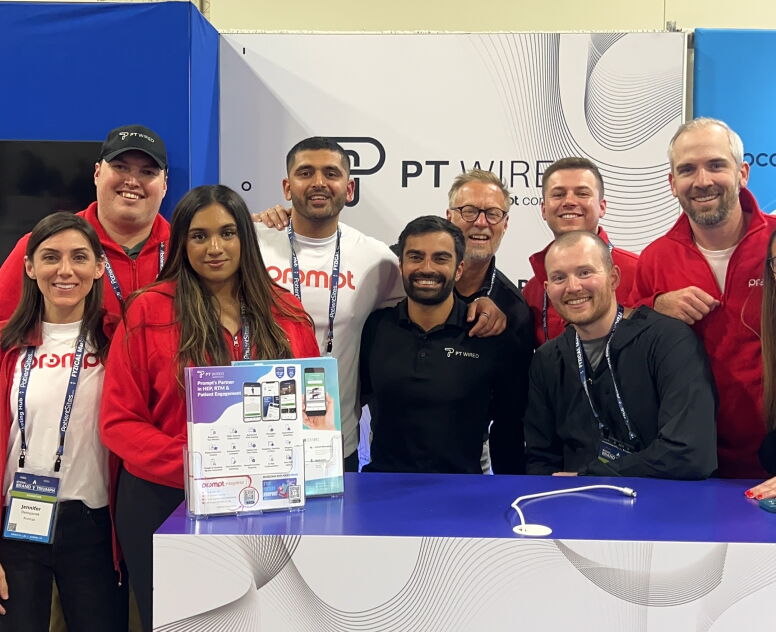
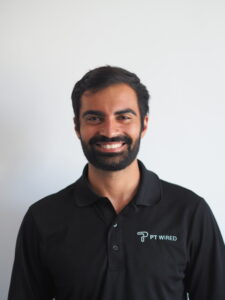
Vikram Sethuraman (BSBA ’16) found his way into business almost by accident.
He nearly missed his opportunity to attend UNC Kenan-Flagler Business School. Yet, what began as a twist of fate turned into something far greater: a classroom idea that evolved into a startup and ultimately led to an exceptional exit.
The story begins when Sethuraman enrolled at University of North Carolina at Chapel Hill, where his family had deep ties.
“I had a lot of family connections, and I was a big UNC basketball fan growing up,” he says. “Being in state, it’s the best you can get for your money — best bang for the buck in terms of really high-quality education without breaking the bank. And my brother was already at UNC, so he played a big part, too.”
Like many undergraduates, Sethuraman came to college without a clear plan, but he felt obliged to figure out the rest of his life — and fast.
“I didn’t really know what I wanted to do,” he says. “I knew that UNC Kenan-Flagler was highly reputable, so that’s how I ended up on the business track originally. I thought, ‘Business sounds good, it sounds generic and applicable, so maybe I’ll do that.’”
The next step was to apply to the Undergraduate Business Program (UBP) as a sophomore, but he missed the email instructing him to schedule his application interview. As a result, he never completed the interview process and was ultimately rejected from the program.
Disappointed but determined, Sethuraman decided to take courses at UNC Kenan-Flagler. When registration opened for non-major students, the only class left for him to take was Intro to Entrepreneurship taught by Professor Jim Kitchen.
Injury changes his course
While playing on the UNC Ultimate Frisbee team, Sethuraman experienced a torn posterior cruciate ligament in his knee and a labral tear in his hip. “Super motivated” to get back in the action, Sethuraman went to UNC Sports Medicine and sought every physical therapy exercise he could to heal fast and regain strength.
“In the clinic, they gave me exercises and all this guidance and cues,” he says. “But when I left, they handed me a piece of paper with handwritten names of exercises. When I got home and tried to do them, I just had the list of names. I knew I wasn’t optimizing because I was forgetting the details and all the nuanced instructions they’d given me in person. That’s how I first had the idea. I remember thinking, ‘Why isn’t there an app for this?’”
He envisioned an app with a video showing how to do each exercise, putting the patient in touch with the medical provider to ask questions, and to track his progress.
So Sethuraman turned that idea into his class project for Kitchen’s course. When he made his final pitch in Kitchen’s class to judges from around the community, the positive feedback he received put him on a high that stuck with him.
“Finishing that pitch, having everything go smoothly, overcoming my fear, and then seeing a positive response — that was huge,” he says. “It turned into a, ‘What if I actually did this, instead of it just being a project?’ moment. It was an exciting and triumphant end to the class.”
Getting into business
When he reapplied to the UBP the next year, he was accepted and pursued finance and consulting.
“But all I could think about was that entrepreneurship class. It had been so fun and exciting and fulfilling,” he says. “I didn’t feel that way about my other classes.”
He felt compelled to pursue finance and headed to London for an international internship offered through the UBP.
“I was trying to live that finance track, but I just wasn’t feeling it,” he says. “All I was thinking about was that entrepreneurship class. When I got back to UNC for my senior year, I changed my track from a finance emphasis to entrepreneurship. I took all the entrepreneurship electives I could — some MBA classes, some UBP classes — and I went back to the project I had started the year before.”
Sethuraman applied every lesson learned in class to his business plan.
“I was always really excited about the idea, but it took me a long time to become truly optimistic about it,” he says. “I’m naturally risk averse, and I kept focusing on all the reasons it wouldn’t work instead of the reasons it would. It took a while to fully make the leap.”
Getting stronger
His confidence started building. In the Launch the Venture class with Professors Randy Myer and Scott Albert, Sethuraman worked intensely on his business plan. He pitched it every week in front of people from around the Triangle, including people from investment firms, experienced entrepreneurs, former CEOs and startup founders.
Then, during his senior year, Sethuraman entered a pitch competition at UNC and won after effectively demonstrating how physical therapy clinics could make money and how the business model would function.
“The bigger thing was that I connected with John Austin (MS ’84), one of the judges who was part of NC IDEA, a nonprofit entrepreneurship organization. Their accelerator program was perfectly timed for when I was graduating. At the time, I still thought, ‘This is crazy. I should just get a job. Why would I go to UNC Kenan-Flagler, get this degree, and then not use it to get a ‘normal job’ instead of starting my own company?’ My thought process became that I would do the accelerator — it was just eight weeks — and if it looks like my idea has potential, I’ll keep going. If not, I’ll stop.”
Finding success
Describing the decision to continue with the startup app after the accelerator was an “emphatic yes,” Sethuraman joined another accelerator at Duke University. This one lasted six months and afterward raised a seed round.
The company, now named PT Wired, grew and he sold it in a multi-million-dollar exit in 2025. Prompt Health, a medical record software company that had been a partner of Sethuraman’s, acquired it. In fact, the two companies grew alongside each other, says Sethuraman.
Today, he serves as vice president of Prompt Engage, which is essentially the rebranded PT Wired.
Sethuraman could bring along his team and keep much of his independence. He recognizes the benefits of going from a small, lean startup to being a department that is part of a much bigger company and doesn’t take for granted the learning opportunities and his chance for personal growth.
He often ponders the road that led him to today and thinks about what might have been. He advises others to keep an open mind while in college and throughout their careers.
“I honestly think about what might have happened if I hadn’t missed my interview,” says Sethuraman. “I might never have ended up in entrepreneurship. I might never have seen this path.”