News & Stories
Embracing change, creating impact
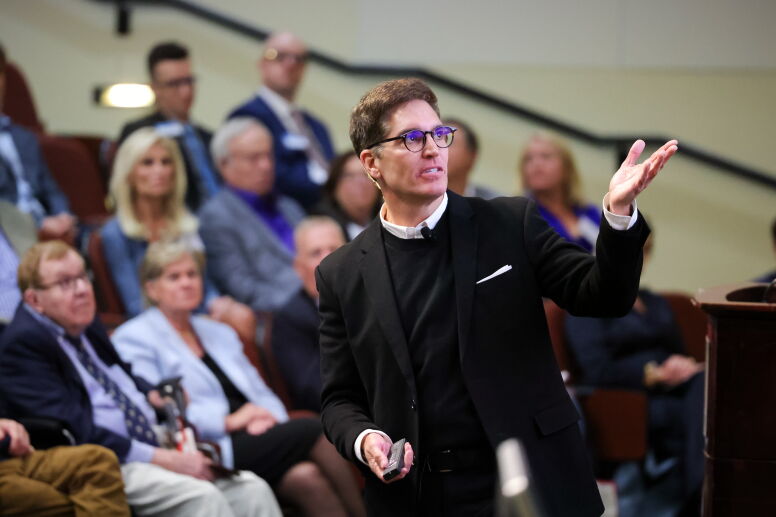
Jason Kilar (ABJM, BSBA ’93) knows what it takes to build and lead some of the world’s most influential media companies.
After beginning his career at The Walt Disney Company, Kilar served as a senior executive at Amazon during its early years, became the founding CEO of Hulu and most recently was the CEO of WarnerMedia, now Warner Bros. Discovery. He also co-founded and led Vessel, an online video service acquired by Verizon, and currently serves on the boards of directors for Roblox and Wealthfront.
Kilar returned to UNC Kenan-Flagler Business School as the speaker for the 2025 Weatherspoon Lecture, where he shared his insights on leadership and innovation with students, faculty and alumni.
He was welcomed back to Chapel Hill with high praise. Dean Mary Margaret Frank (BSBA ’92, MAC ’92, PhD ’99) called him “a leader who embodies the positive power of business through thoughtful, values-driven leadership.” Chancellor Lee Roberts added, “His career exemplifies the transformative impact of business and technology, making him an inspiring figure for future leaders.”
Kilar outlined four key steps for what it means to build the future, sharing examples of companies that succeeded by following them.
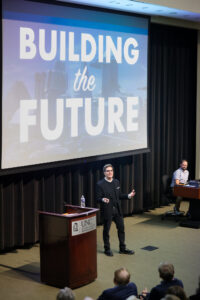
As a leader, Kilar emphasizes being “as transparent as possible, whether you are leading a team of 12 people or a team of 30,000.”
Start with the basics
It’s almost impossible to build a long-term business on an unstable foundation. To persist, businesses must focus on one of two things: delivering what people need or offering what they want.
The good thing is that fundamental human needs and desires rarely change. Think being entertained, enjoying food, living a healthier life or learning a new skill.
For instance, in 1903, Ford Motor Company set out to address people’s desire for mobility. A century later, Tesla pursued the same goal. Even later, Uber launched to meet this need in a new way.
Master the obvious
Leaning into the future means noticing the things that everyone else ignores, even if they are hidden in plain sight.
“Business has a way of getting super complicated unnecessarily,” Kilar said. “Take a step back and focus on the real matter at hand.”
Most great business origin stories stem from widely held frustrations or things people quietly endure. Netflix started in response to frustration over late fees at Blockbuster. Walmart was founded to address a lack of retail options in rural areas. Amazon began because bookstores did not have long enough hours or enough inventory for most readers.
Relentlessly pursue better ways
Once you master the obvious, you can fix it.
At Hulu, Kilar and his team were “relentless about trying to solve the problem of being able to let people watch what they wanted, when they wanted, where they wanted.”
His determination stemmed from something personal — his favorite childhood show, “Speed Racer,” always began before he could make it home from the bus stop.
Lean into the future
Once a business is successfully launched, human instinct says to maintain the status quo. But every business follows an upside-down U curve. The only way to extend that curve is to embrace the future.
Apple changed music forever by creating the iPod after years of making only computers. Amazon entered the hardware market with the Kindle, transforming the way people read. More recently, Google shifted to AI-powered search results. Although this move is not yet proven — Google’s stock initially declined after the change — the company leaned into the future anyway.

Kilar’s 80-year-old mother sits in the second row of the crowd beaming with pride.
Kilar’s final advice was to stay curious, prioritize effective communication and embrace emerging technologies as tools to enhance rather than replace human capabilities.
“I’m a big believer in trying to think into the future,” he said. “You want to be proud two decades from now about what you helped to create.”
The Weatherspoon Lecture, made possible by a generous gift from the late Van and Kay Weatherspoon, brings accomplished leaders to Chapel Hill to share insights and experiences that shape the next generation of leaders.