News & Stories
AI and the accounting profession
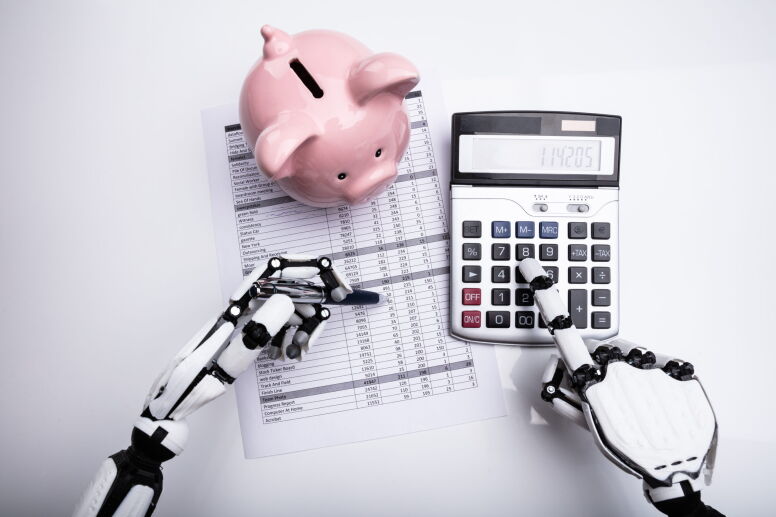
As artificial intelligence (AI) takes over more routine work, the question of whose job is next in the firing line is becoming harder to ignore.
For years, accountants sat near the top of that list. Much of their job — processing numbers, checking compliance, preparing reports — follows clear rules. That makes it well suited to automation.
A new study by UNC Kenan-Flagler Business School professors uses a decade of corporate hiring data to examine whether firms’ accounting-related AI investments reduce demand for accountants — and whether the accounting work that remains suffers as a result.
Professors Daniela De la Parra, John Gallemore and Stephen Glaeser — along with Jens Böke of the University of Münster — tracked about 6,800 public companies across sectors and found that when firms invest in AI — specifically the precursors to generative AI — they need fewer accountants.
They share their findings in “Artificial Intelligence and White-Collar Work: Evidence from the Accounting Profession.”
Hiring just one “AI specialist” — someone who combines AI skills with accounting work — is associated with, on average across firms, about five fewer job postings that require accounting skills, and about two fewer traditional accounting roles, such as auditors or tax specialists.
That’s a grim signal that AI is not just assisting accountants: It is beginning to replace parts of their jobs.
The researchers measured accounting-related AI investment by analyzing more than 76 million job postings from thousands of public companies from 2014 to 2023. They examined machine learning, deep learning and natural-language processing that firms were already building into accounting-related work. They look at what firms are actually hiring for: roles that combine accounting and AI skills.
As companies bring in people who can build or run AI systems, they scale back their demand for traditional accounting work. The effect shows up across the board, from tax to audit to financial reporting.
But the story is thankfully not just about job losses.
AI also appears to make the work that remains both faster and cheaper.
Firms using more AI in their accounting functions file annual reports sooner — about five days faster on average, they find. The reports are easier to read, and audit costs fall sharply, by roughly $425,000 for a typical firm.
In other words, the day-to-day grind of accounting — preparing documents, checking numbers, producing reports — becomes more efficient when AI is used.
“This is likely to lead to fewer accountants, but it will likely increase the productivity of those who stay,” says Gallemore.
That raises an obvious question. If AI is cutting jobs and speeding up things, is quality suffering?
Surprisingly, the answer seems to be no.
“Firms are reducing costs, but core financial outcomes don’t seem to be getting worse,” says Gallemore.
There is, for instance, no meaningful change in profitability, tax rates or the likelihood of financial restatements — the kind of serious errors that can take a chunk out of a company’s share price.
AI also improves the accuracy of tax forecasts, reducing errors by about 1.1 percentage points.
Put simply, the process is changing. The outcomes are not, at least not yet.
That said, the researchers are careful to note that AI’s impact on accounting jobs remains relatively modest so far. Hiring for AI roles in accounting makes up fewer than 3% of job postings in each accounting area, according to the researchers.
But the broader trend is hard to miss.
Investment in AI for accounting has accelerated in recent years, particularly since 2018, according to their findings.
Companies are, in a nutshell, hiring fewer people to do traditional accounting work, and more people to automate it.
“If I needed 10 or 20 junior accountants before, maybe I just need two to oversee the process,” says Gallemore.
For accountants, that leaves a narrowing path forward. The routine parts of the job are increasingly handled by machines.
What remains? Work that is harder to automate, the kind that relies on judgment, experience and relationships.
“You still need critical thinking and institutional knowledge to know when to trust the output,” he says. “There is a personal aspect to this job, too: communicating information and building trust. It will be harder for AI to replace that.”