Perspectives
Hormuz: Iran’s ‘Wasting Asset’
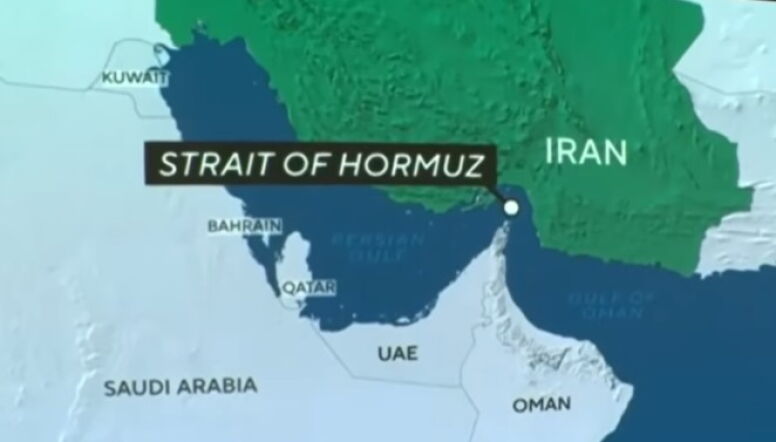
Director’s Blog XXIX by Stephen V. Arbogast
Why Time, Oil Flows and Bypass Capacity May be Changing the Outcome of Confrontation with Iran
In the last two weeks, several little noticed developments have brought more clarity to the Iran/Hormuz situation. In its July 18 edition The Economist, a staunch opponent of the U.S. military action against Iran, published another critical ‘Leader’ entitled “Trump’s blind alley.” Near its end, however, this surprising position appeared:
“The options are not good…All…involve demonstrating to Iran’s hardliners that America has the resolve to impose a sustained blockade on Iranian oil exports – even if that raises the price of petrol before the midterm elections…America has restored the embargo against Iran which is a start. To show its will, it should also continue to match Iranian strikes. Mr. Trump made a foolish mistake by starting this war. However…he now has little choice but to stick it out.”
With the exception of treating the war as a foolish mistake, this has been The Wall Street Journal’s position for some months – witness their Aug. 11 editorial with these lines:
“The better option, then, would be to continue the pressure of the blockade and sanctions, rather than sign a deal that hands over control of the Strait and gives economic relief up front, while knowing that Iran will violate its commitments. Amid all the attacks and demands, it’s easy to forget that the regime is economically weak, with a damaged nuclear program, leadership and industrial base.”
For The Economist and the Journal to end up agreeing on a U.S. go-forward plan is notable – it represents some hardening of support for sustaining the US pressure on Iran and reveals another little noted truth – that Iran’s extreme positions, devised and calculated to mask its fundamental weakness, are beginning to prove counter-productive.
There was a second revelation in the WSJ’s piece – again little noted:
“Iran has launched at least 22 strikes in the past two weeks, getting away with firing some 52 drones and 12 missiles. Yet the price of oil has stayed around $80, in part due to the 8 million barrels a day that U.S. officials say is being sneaked out of the Strait.”
This, if true, is a stunning oil export “leakage” figure. The report gains credibility when Energy Secretary Wright’s earlier comments are considered – on June 12 Reuters reported Wright as indicating 7 MB/D are exiting the Strait with US military help. While other observers, including Chevron CEO Mike Wirth, have questioned these figures, there seems to be a growing consensus that material volumes are getting through the Strait.
Taken together, these developments go some distance towards explaining why oil prices have remained muted in the face of reports and headlines of Iranian hardline stances and missile attacks. Indeed, they point to the need to reevaluate the Hormuz situation within a longer-term timeframe. Blockades take time to work.
Once this longer timeframe is employed, several less-examined features of the confrontation come to the fore. These cast a different light on how the Hormuz crisis may play out.
The U.S./Israeli vs. Iran Confrontation is Existential:
Repeatedly ignored in all the discussion of negotiated settlements and ‘exit ramps’ is the fact that the conflict has been conducted in a way that makes negotiating a durable settlement very difficult. The US and Israel went for the Iran regime’s throat last February. By targeting Iran’s Supreme Leader and assassinating various senior political and military leaders, they left little doubt that ‘decapitation’ was their ‘go to war’ strategy. This was combined with direct assaults on Revolutionary Guards forces (IRGC) and infrastructure.
An opening leadership decapitation strategy strongly suggests regime change was a serious, if unstated, U.S./Israeli goal. This was confirmed in a backhanded way by the fact that the administration seemed unprepared for both a closure of the Hormuz Strait and a prolonged conflict. Plan A seems to have been eliminating Iran’s top leadership, paving the way for either their replacement by more pliable leaders or a popular uprising. Contemporary reporting (WSJ) subsequently revealed that Trump had been warned Iran could close Hormuz, but he expected Tehran to capitulate before doing so.That expectation helps explain why the administration appeared so poorly prepared for both the closure of the Strait and the prolonged conflict that followed. This would explain much of the improvising the administration has had to do to conduct a prolonged conflict.
Given the decapitation effort and the ferocity of subsequent assaults, there should be little doubt that Iran’s surviving leaders believe that the U.S./Israel’s ultimate goal remains their extinguishment. Their diplomats implicitly confirm this by saying there is no basis for trusting President Trump or Israel to adhere to the terms of any settlement. This leads to a second, largely ignored but critical implication:
A Durable Settlement Agreement Among U.S,/Israel and this Iranian Regime is Today Unlikely:
If Iran’s current leadership believes regime change was and is a U.S./Israel goal, they have little basis for believing that any negotiated ‘settlement’ will secure their survival. More likely, Iran will regard any such agreement as a pause before another round of fighting or attempted economic strangulation.
This perspective contrasts with much of the U.S. public discussion. There, speculation abounds that President Trump is actively seeking an ‘off ramp’ to calm the waters before November’s midterm elections. Parallel leaks suggest that the President is tired of the struggle and regards the whole affair as a mistake. These reports encourage an Iranian perspective of ‘waiting out’ the administration and hoping the elections so cripple it politically that it will accept a Hormuz solution highly favorable to Iran.
There are reasons to view this perspective as mistaken. For starters, it may misjudge President Trump. Whatever he may do tactically to improve GOP midterm prospects, President Trump is not known for quitting games where he has pushed mountains of his own chips into the pot. A better bet is that the President is using this period of relative calm to restock munitions, rest and rotate forces, and assess the situation inside Iran. Contingency planning for further actions after November likely are proceeding. This outlook is strengthened by the prospect that any Democrat success in November is unlikely to be so great as to prevent President Trump from retaining freedom of action towards Iran. There is also the firming of support, mentioned earlier, for ‘seeing it through’ with the Iranian showdown.
However, the final and strongest reason is that mentioned at the outset of this section – Iran’s leaders currently do not see any potential for a durable settlement with the US/Israeli leadership. This leads to the next underemphasized point – all ‘settlement discussions’ are now, and probably have been tactical:
U.S./Israeli and Iranian Negotiations are Tactical – and What’s Interesting are Their Tactical Objectives
Since the ingredients essential for a durable settlement are not in place, other motives are driving the repeated episodes of Iran-U.S. negotiations. Possibly President Trump once believed that some combination of punishing air assaults, threats to do more of the same, and big dollars in sanctions relief would be enough for Iran’s surviving leaders to make a deal. Repeated experiences of apparent deals to reopen the Strait being immediately undercut by Iranian missile and drone attacks have disabused him of this belief – hence his outburst about how miserably untrustworthy are the Iranian counterparties.
As expectations of a durable agreement evaporated, ongoing discussions, sometimes direct, sometimes via intermediary states, took on a different character. They served tactical objectives on both sides. For Iran, talks plus reports of settlements being ‘near’ brought relief from immediate pressures: e.g., further attacks on infrastructure and the missile/drone capabilities critical to keeping Hormuz sealed, while providing an opening for Iranian oil to reach customers and generate scarce foreign exchange. For the U.S., they allowed more oil to escape the Persian Gulf, restocking commercial inventories and helping to keep prices moderate. They also allowed time for restocking expended munitions and resting armed forces on deployment. Recent reports of harsh conditions on the USS Abraham Lincoln after 250 days at sea underscore how important such respites are and what ensues if they are not available. Several sailors aboard the carrier reportedly attempted to jump overboard.
Baring something unforeseen, this ‘on again, off again’ nature of settlement talks is likely to continue. Both sides now have additional tactical reasons for respites. The U.S. blockade of Iran’s oil exports seems a powerful pressure point. When initially applied, there was considerable discussion that Iran could not long endure a blockade before it ran out of storage and was forced to shut-in producing oil wells. With the blockade again in place, that pressure is again mounting. Iran may regard relieving this pressure as essential. Meanwhile, the US may be facing serious depletion of its munitions, exhaustion of its forces on deployment, and the midterms drawing near.
Throughout these past months, Iran has given a master class in negotiating from weakness. Despite its military and economy being severely damaged and its leadership partially eliminated, by leveraging its one remaining card Iran has applied serious pressure to its adversaries. The regime’s ability to sustain attacks on ships transiting the Strait cowed many ship owners into not attempting the passage. This Iran combined with ferocious propaganda, very hard negotiating positions, and a good cop/bad cop dance among its negotiators and back-home hard liners. These efforts have at times befuddled the U.S. administration while handing President Trump’s media enemies plenty of ammunition to pronounce his Iranian conflict a strategic mistake and policy disaster.
Tactical virtuosity, however, can have a shelf life. It is most effective when there is a clear end point in sight. If a GOP defeat in the midterms is that end point, Iran’s maneuverings could have the last word. But what if those elections are not the end point?
The Hormuz Contest will Likely Extend Beyond November – Who then Has the Advantage?
The extremity of Iran’s settlement terms deserves attention: Iran demands an institutionalized control over traffic through the Strait, sanctions relief and reparation payments, no restraints on their nuclear program, an end of attacks on Iranian regional proxies and U.S. military withdrawal from the area. These are easily dismissed as a maximum bargaining position serving Iran’s tactical objectives. They are, however, what Iran has put on the table. Moreover, they form part of the regime’s tactical approach to mask fundamental weaknesses with belligerence and intransigence.
This list of demands has another important characteristic – if conceded it would amount to a complete humiliation of the U.S. and Israel. It also would put in place a set of circumstances (e.g., an end to freedom of navigation) unacceptable to many other nations.
By framing any Hormuz settlement in this fashion, Iran has inadvertently made the case for the U.S./Israeli to ‘see the struggle out’ – sustaining their blockade and preparing for future attacks. Given a choice between abject humiliation and continuing to punish Iran, the US/Israel choice tilts heavily in the latter direction. Some of this is visible in the Economist/WSJ positioning cited earlier.
If one assumes the conflict will extend beyond November’s elections, does the outlook for Hormuz change when viewed within a longer timeframe? It does. Time is not on Iran’s side. To see why, one must examine what the other Persian Gulf oil producers are doing to alter their hostage status.
Hormuz is a ‘Wasting Asset’ for Iran over time as Persian Gulf producers expand ‘Bypass Capacity’
Iran’s shuttering the Strait was initially figured to deprive the global economy of some 15 MB/D of crude supplies. Some early forecasters saw crude oil prices heading for $200/b. This didn’t come close to happening. Crude production increased elsewhere, commercial inventories and strategic reserve stocks were drawn down, some supplies eventually ‘leaked’ through the Strait, and nations such as China were successful in suppressing normal oil demand. Another factor also contributed: Saudi Arabia and the UAE possessed significant ‘bypass capacity.’
In Saudi Arabia’s case we are talking about their ‘East-West’ pipeline (Petroline). Petroline has 7 MB/D of capacity, of which roughly 2 MB/D supplies Saudi refineries and approximately 5 MB/D is available for export through Yanbu. At the conflict’s outset, this line was carrying ~1 MB/D. Today Petroline operates near full capacity, with its export volumes heading either to Asia or to Europe via the SUMED pipeline/Suez Canal. As for Abu Dhabi, its Fujairah pipeline bypasses Hormuz and carries 1.5-1.8 MB/D to export terminals on the Gulf of Oman. This oil has continued to flow to market since February.
Both Saudi Arabia and the UAE are now expanding this bypass capacity. The Saudis are studying expanding Petroline by up to 2 MB/D, possibly with a parallel trunk line. UAE’s ADNOC had begun Fujairah expansion before the war. It now expects to expand Fujairah to 3 MB/D of capacity by mid 2027. Together with the Saudi upgrades, this would bring their combined bypass export capacity to 9-10 MB/D. Iraq and Kuwait are then the ‘laggards’ in the region.
Iraq was a 3-4 MB/D producer before the conflict. Most of this production is in Basra, southern Iraq. Its smaller production, at Kirkuk, lies in the north. Kirkuk production has access to a large export system terminating in Ceyhan, Turkey. This line is greatly underutilized; about 250 KB/D currently flows through it. Iraq is also exporting a similar amount of fuel oil via trucking through Syria. Finally, a significant amount of southern Iraqi crude is counted among the volumes today leaking through Hormuz.
Iraq realizes none of these solutions will durably enable its currently shut-in production to reach global markets. Two large bypass projects are thus in formation. On July 17, Iraq and Syria formally announced cooperation on rehabilitating/reconstructing the Iraq-Syria crude pipeline. The U.S. State Department welcomed the project and said a U.S.-led international consortium would handle technical and financial work. The proposed initial capacity is a very substantial 2 million b/d, ultimately connecting Iraqi production to the Mediterranean. A second project in formation would be internal to Iraq, taking southern Basra crude north to connect with the Kirkuk to Ceyhan system. Collectively these projects would allow most if not all Iraqi crude to reach markets via routes other than Hormuz. That said, none of this infrastructure is expected online this year or in 2027.
For the moment both Kuwait’s 2 MB/D of crude production is severely constrained, though some oil seems to be making it to market. Qatar’s LNG remains shut-in. Kuwait is reported to be having discussions with both the Saudis and the UAE. Connecting to and further enlarging the Saudi’s Petroline is believed to make the most sense.
This bypass situation provides the following outlook through 2027 and 2028:
Current Bypass Capacity MB/D
Saudi Petroline 5.0
UAE Fujairah 1.8
Iraq, including fuel oil 0.4
Subtotal 7.2
Additions by end 2027
Saudi Petroline 2.0
UAE Fujairah 1.2
Subtotal 3.2
Combined Subtotal 10.4
Additions by end 2028
Iraq + Kuwait projects 3.0-4.0
Total 13-14.4
This outlook is broadly in line with a recent Goldman Sachs study which foresees 3.8 MB/D of new bypass capacity by end-2027, and an incremental 4.7 MB/D by end-2028. Goldman starts with a smaller current bypass figure but concludes that 14 MB/D will be available by end-2028.
Assuming these projects come to pass, the implications for Iran are significant. Controlling Hormuz will become a ‘wasting asset’ in its struggle with the US/Israel. Within two years, enough competing Gulf oil could bypass Hormuz that an Iranian closure might inflict proportionately more damage on Iran’s own exports than on those of its Arab neighbors. Within one year, that outcome will be clearly visible.
This bypass buildout thus has the potential to reduce to negligible Iran’s principal source of leverage. Meanwhile, the blockade of Iranian exports starves the regime of the hard currency needed to rebuild its arsenals and sustain its repressive forces. The longer this goes on, the weaker the Iran regime’s position should become. Time is not on Iran’s side.
Outcome Scenarios and the Big Prize Still Within Reach
Many potential outcome scenarios can be envisioned, but the above analysis suggests that the bulk of probability coalesces around the following three:
Scenario 1: A Tactically Motivated Settlement that ‘Sticks’
In this scenario, a critical mass of tactical motivations produces a settlement that is not then disrupted by military strikes from either side. For Iran, the motivations would be the need for hard currency, the avoidance of ‘shut-in’ damage to its oil fields, and a realization that it cannot restore its leverage over Hormuz without rebuilding its strike arsenal. On the U.S./Israeli side, there would be all the benefits of normalizing oil flows plus their need to rest and refurbish their military forces.
Given the existential nature of the dispute, it is difficult to surmise how long this agreement might ‘stick.’ One side or the other might decide its tactical goals have been served, and it is time to step up pressure with tactics that undercut the agreement. That said, the ‘restorative’ efforts involved on both sides will certainly consume months, if not years, and such a ‘normalization’ might gather its own momentum once underway.
Scenario 2: Apparent Ongoing Stalemate While Iran’s Leverage Erodes
In this scenario, both sides maintain their leverage and negotiating stances. Iran tries to rebuild its strike capabilities, arrest oil leaking through the Strait and threaten the bypass infrastructures. The U.S. maintains its blockade and makes occasional strikes to retaliate and degrade Iran’s threat capabilities.
Iran’s bet in this scenario is that it can rein in Hormuz leakage and bypass volumes sufficiently to produce a supply crisis that forces the US to accept terms like ongoing Iranian control over the Strait. If it fails to accomplish this, Iran will find that time is not on its side and that its once potent leverage over supplies is disappearing. Meanwhile, it will be under acute pressure from the ongoing blockade.
If the regime recognizes its bargaining power is weakening, it may then attempt a settlement like the one first negotiated in June – except this time it would actually allow Hormuz to return to normal in retain for the blockade’s end and sanctions relief. This would be an agreement that ‘sticks.’
If, however, regime hardliners ignore Iran’s eroding position and continue to block making settlement concessions, an internal crisis of a hard to predict nature may ensue. This leads to the third scenario:
Scenario 3: Crisis and Regime Change in Iran
Imagine that the U.S. blockade of Iranian exports continues for a year or even six months. Iran’s regime is renowned for its ability to withstand pain, much of it inflicted on the general population. However, it has never had to do without hard currency at this level of starvation while also facing the degrading of its military power and the devastation inflicted on the general economy. It is not hard to imagine that such conditions at some point will become so acute that a moment of crisis will appear.
What happens then is difficult to guess. Do elements in the Iranian military move against the Revolutionary Guard? Is there a popular uprising? Does the country fragment along ethnic lines? No one of these crisis scenarios deserves a high probability based on what is known today – but the aggregate of such crisis events deserves a reasonable, compound probability, assuming that the US blockade will be maintained and will be punishing.
Almost every regime change scenario will be focused on relieving the acute crisis conditions that brought them to power. This could open the door for Iran to become a more ‘normal’ country. The new regime’s rationale would no longer be existential opposition to the U.S, and Israel.
What Does All This Mean for Oil Prices?
This discussion begins with the observation that forecasters have mostly been wrong, their outlooks missing by previewing much higher prices than materialized. Brent crude remains below $90/B while WTI, as of mid-August, resides in the low $80s/B.
Interestingly, through spring and early summer more moderate prices were seen as the product of onetime depletions of commercial inventory and strategic reserves. Later, demand suppression, especially in China, was noted. Questions remained as to the durability of these measures and fears of a potential price spike were seen as a prime motive for the administration’s entering the June deal.
Today’s situation appears quite different. Significant supply leakage through Hormuz seems to be complemented by lower demand as the major factors balancing the market. Leakage estimates vary. Private sources show a wide range of 2-7 MB/D whereas US government sources have it at 8-9 MB/D.
Higher numbers seem more consistent with the ongoing price moderation. Whether accomplished by ‘sneaking through dark’ with US military help, paying Iranian tolls or just taking the risk in return for higher prices, many shippers now seem committed to moving through the Strait. Some of this shipping seems to have been chartered by the exporting countries themselves. Pinprick Iranian attacks continue but haven’t produced the shutdown their public statements continue to advertise. Some scattered Houthi assaults in the Red Sea and one strike against Egypt do not appear to have materially impacted exports out of locations like Yanbu. Meanwhile, higher prices continue to coax forth additional barrels from non-Persian Gulf locations, and refined product suppliers appear tighter than those for crude oil.
Near-term crude prices will thus depend upon whether Iran can reconstitute a more serious threat to the leakage now flowing through the Strait. Iran’s remaining strategic objective isn’t necessarily to achieve a hermetic closure. It is to make passage sufficiently dangerous and expensive that commercial shipping voluntarily stays away. There are reasons to believe this will be difficult for the regime to accomplish. The US blockade not only deprives the regime of the hard currency needed for munitions purchases but makes their importation more difficult. US suppression tactics against missile and drone launches have had some success and could be reconstituted if Iran resumes regular attacks. Tactics allowing shippers to slip through the Strait may also continue to improve. That has been their trajectory over the last several months.
It is not out of the question that Iran can somehow muster the capacity for another dramatic assault on Hormuz shipping and thus disrupt the current leakage flows. The threat of this alone will keep oil prices on a simmer in the months ahead. If we assume a pre-war baseline WTI crude price outlook of $70/B, continued risk premiums on the order of $10-15/B would not be a surprise.
That said, the ‘long’ case for crude prices is at risk. If it becomes even clearer Iran cannot stop flows through the Strait, risk premiums could shrink or even disappear. Longer term, if the U.S. ‘stays the course’ blockading Iran and the bypass capacity scenario materializes, crude prices could trend towards pre-war levels. Re-stocking would be one source of support, and some demand would return from suppression, but prices generally lower than today would be the trend.
Final Thoughts: Regime Change would be a big prize if it were to come about:
Iran has been the principal architect of regional instability for many decades. Recent events surrounding its existential conflict with the US/Israel have partially obscured important evolutions in Middle East relations on other fronts. The list of these evolutions is worth noting:
- Israel’s peace with Egypt and Jordan has proven durable.
- Other Arab states are willing to normalize relations with Israel, per the Abraham Accords.
- The Palestinian issue, while by no means resolved, has lost some of its grip on the ‘Arab Street.’
- Hydrocarbon rich states, e.g., Saudi, Qatar and the UAE, are interested in diversifying their economies for the long run and see Israel as a dynamic economic actor for regional growth.
- Iraq, while by no means a settled state, is no longer run by a dictator bent on regional dominance and Iran’s influence there is today weaker.
- Iran’s regional proxies are also weaker, and Lebanon seems interested in reclaiming its sovereignty from Hezbollah.
Together, these conditions suggest that removal of an Iranian regime which has fostered regional instability, funded its regional proxies and kept the Palestinian issue at a boil would open a door to the possibility of a new era of more peaceful relations. Iran itself may encounter serious instability. No one should underestimate the Middle East’s ability to invent new causes for conflict. That said, it has been over a century since one could realistically talk about the possibility of an era of peace and economic progress in the Middle East.
That is the Big Prize that could be within reach if the U.S. and Israel ‘stay the course’ in their confrontation with the regime in Tehran.