Perspectives
Energy Security, The Strait of Hormuz, and the Iran Endgame
Director’s Blog XXIII by Stephen V. Arbogast
ABSTRACT
The strategic consequence of the current crisis is that Gulf producers now have both the incentive and the blueprint to build an ‘insurance architecture’ of westbound pipelines—anchored by a Basra–Aqaba trunkline—that would permanently reduce Iran’s ability to weaponize the Strait of Hormuz.
Confusion reigns as to how the immediate situation in the Persian Gulf will play out. Will attacks on Iran continue, be stopped by a negotiated cease fire, or peter out while both sides declare ‘victory?’ Will the Strait of Hormuz remain closed, reopen to a trickle of traffic, or resume normal activity? Will U.S. ground forces enter, extracting Iranian nuclear stocks or seizing strategic islands and export facilities? At this point, nobody knows, including the leaders engaged on all sides.
What is clear is that there will be some ‘interregnum’ when supply conditions ‘normalize’ for some time. Neither side seems willing or able to land a knock-out blow. The U.S. and Israel have not fostered the internal uprising that would accomplish Iranian regime change and while Iran has succeeded in delivering threats and imposing costs, these are not close to bringing the global economy to a crisis. Its two protagonists, the U.S. and Israel, are in fact less impacted than many neutrals. Thus, the likely short-term outcome is some official or non-official cessation of hostilities wherein both sides take some satisfaction in the results – for the US and Israel, an immediate defanging of a dangerous regime and for the Iranian authorities, survival and the demonstration of their power to disrupt global energy supplies.
This outlook, however, does not look stable. For the Iran regime, its state of threat is existential. It has no reason to trust either the U.S and Israel nor its own population. Using any interregnum to rebuild its capacities for control and deterrence will be seen as urgent. For the regime’s remaining leaders, there will be a palpable sense that their execution may be imminent and there is no place to flee nor to hide. For the Trump Administration and the Netanyahu government, there will be the reality of unfinished business and the daunting task of monitoring Iranian rearmament.
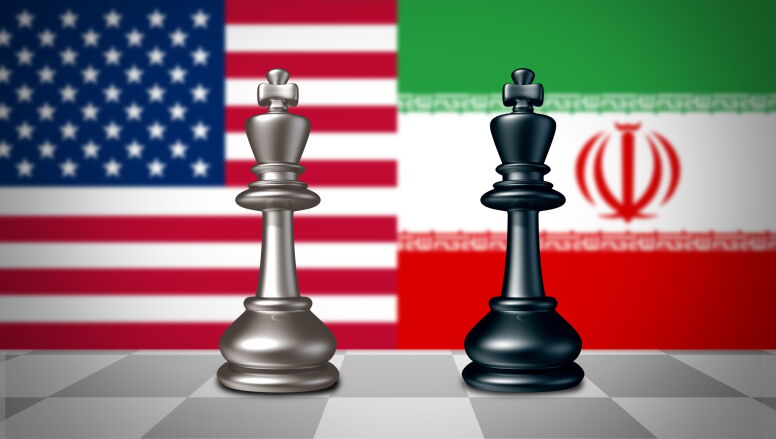
There is a third piece on this chess board, one not now receiving much attention – what will the other Persian Gulf states do to reduce their exposure to Iranian blackmail? If they succeed in this task, any resumption of U.S./Israeli-Iran hostilities would take place with Iran’s biggest countermove weakened or even eliminated. This requires a review of the Gulf states’ bypass export options which architecture is key to reducing their need to ship through the Strait if hostilities resume. This architecture would consist of a westbound trunkline anchored in southern Iraq, supplemented by incremental connectors (e.g., Kuwait) and expansions of existing Saudi and UAE systems.
Understanding this dimension begins with a quick history review of Persian Gulf logistics. Prior to 1956 most west-flowing Persian Gulf production went around the Arabian Peninsula, up the Red Sea and through the Suez Canal in ‘Suez-Max’ sized tankers. Iran had a moderately pro-western government and was not seen as a threat to close the Strait of Hormuz. The 1956 Arab-Israeli War did see the Suez Canal closed for months. This was the first experience of a choke point affecting supplies out of the Persian Gulf. However, the U.S. had ample spare production capacity at the time, and no oil supply crisis ensued. The 1967 war also saw the Suez Canal blocked. This time however, an altered technology, super-tankers, entered the picture. These ships were too large to transit the Suez Canal, but their economies of scale (they could carry 2-3X the volume of Suez-Max vessels) made it economic to send them around Africa and onto European markets.
During normal (peaceful) times, super-tanker economics continue to shape the export logistics out of the Persian Gulf. These large ships enter the Strait of Hormuz to pick up crude from Saudi Arabia, Kuwait, the U.A.E., Iraq and Iran. They then reverse course out of the Gulf, through the Strait and onto their European, Asian or Western Hemisphere destinations.
It did not escape the notice of the Gulf producing states that the Strait is an easy place to disrupt these logistics. Limited efforts were made to create ‘bypass capacity.’ Mostly this took the form of pipelines, like Tapline, which provided direct shipments to ports on the Mediterranean. However, past US Navy successes in overcoming threats to close the Strait allowed Gulf producers to limit the effort and capital they put into creating bypass capacity. Other threats (e.g., Iranian proxy groups) and bad relations with Israel contributed to limiting the development of alternatives to shipping via the Hormuz route.
This may now change with some facts revealed by the current conflict. For one thing, the U.S. Navy has been visibly reticent to organize and guard convoys transiting the Strait. Prior escort efforts did not have to deal with Iran’s use of saturation missile and drone strikes. The inefficiency, to say nothing of the assured effectiveness of using million-dollar interceptors to destroy thousand-dollar swarm attacks is clearly at play here. So long as there is a regime in Tehran determined to face down the U.S. and Israel and possessing the weapons sufficient to threaten even a small portion of the Strait’s tanker traffic, this transitway could be effectively blocked.
The affected Gulf states are taking careful notice of these new realities. Even if some negotiated settlement allows traffic to flow, an Iranian threat to resume attacks will strongly influence affairs in the Gulf. Iran’s regime survivors emerging from their bunkers may well conclude that this threat gives them a shield behind which they can rebuild their offensive and defensive capabilities, force an end to sanctions, and then decide on what payback to hand out to the attackers. The other Gulf states may well conclude that such an outcome would be even worse that the situation before the U.S. and Israel attacked. At a minimum, they would conclude that a very large risk premium was now attached to their export shipment through the Strait.
Facing this situation will Gulf state minds turn to the question of building out their bypass options? How feasible would that be? The answers here start with recognizing what already exists. The discussion then moves forward into what added capacity could be created and where it would reside.
The chart below shows Gulf states production and volumes moved through the Strait in the month prior to the current war.
State Total Production MB/D Volume thru Strait MB/D
Saudi Arabia ~10.0 ~5.5
Iraq ~4.3 ~3.3
Iran ~3.2 ~1.5
U.A.E. ~3.2-3.3 ~1.9
Kuwait ~2.7-2.8 ~1.3
Others ~1.5-2.0 ~1.0
Total ~25-26 ~14-15
Estimates of total oil moving through the Strait are higher, in the range of 18-20 MB/D. Refined products make up the difference. In addition, virtually all Gulf LNG, most of it from Qatar, also transited the Strait of Hormuz.
Hidden in these figures is the fact that Saudi Arabia, the U.A.E. and to a lesser extent Iraq have created some bypass capacity. This capacity is presented in this chart and further elaborated below.
Current Operational Bypass Capacity and Current Usage: MB/D
These figures suggest that something on the order of 6-8 MB/D of usable bypass capacity existed pre-crisis, of which 4-5 MB/D was spare. The Iraq capacity is somewhat theoretical as the pipeline in question only connects Northern Iraq’s production which is less than the line’s capacity. All of Iraq’s larger Basra production is stranded. All of Kuwait’s production is also trapped. Altogether, this leaves something on the order of 10-12 MB/D of Gulf states crude and products production currently stranded.
Now ‘turn the page’ and imagine what a determined effort would look like to render the Strait of Hormuz a less dangerous choke point. The first stage involves optimizing current bypass capacity. Saudi Arabia can debottleneck its Petroline system. This largely involves Yanbu port facilities and could add up to 2 MB/D of bypass thruput. Fully optimizing this system could push Saudi East-West capacity to 9 MB/D, which roughly accords with Saudi export shipments in normal markets. A similar but smaller debottleneck of U.A.E.’s Fujairah system could unlock another .5 MB/D. Making more use of the Kirkuk-Ceyhan system to ship northern Iraqi crude could add up to .5 MB/D. Altogether, optimizing current systems could add ~3 MB/D, bringing total Gulf bypass capacity to 9-11 MB/D.
Southern Iraqi and Kuwaiti crude production are the next challenges, and these need to be met with new infrastructure. Iraq could put more Basra production through the pipeline to Ceyhan if it rebuilds internal lines running south to north. However, the key project here, already in development, is a Basra-Aqaba crude line. This pipeline would run from southern Iraq through Jordan to its Red Sea port of Aqaba. Its initial capacity would be 2.5 MB/D, expandable to 3.5 MB/D. Iraq’s cabinet has approved a framework agreement for the project. Financing and EPC contracting remain to be accomplished.
Joining this project might be Kuwait’s best insurance policy. A short connector line, little more than 20 kilometers, could put Kuwait’s crude production into the system. This connector project would be trivial in terms of engineering or cost. The whole Basra-Aqaba system, including a Kuwait connector, is estimated to cost $10 billion. At 3.5 MB/D thruput and a $70/B price, this cost would be offset by avoiding a ~40-day Hormuz supply disruption.
To date, Kuwait has counted on U.S. forces to ensure the Strait remains open. Current events now call that approach into question. Several factors also discouraged Kuwait from considering an Iraqi pipeline outlet. Bad history, specifically Iraq’s 1990 invasion of Kuwait, has been a barrier to Kuwait joining the project. Kuwait may also fear lingering Iranian influence within Iraq.
However, if Kuwait were to view the project more as an insurance policy, joining a Basra-Aqaba system would make sense. In this scenario Kuwait would continue to rely on shipping production through the Strait, moving only limited base production barrels thru the Iraq-Aqaba system. Should Hormuz be threatened again however, Kuwait would have this alternative route to get production to market. The case for Kuwait to ‘let bygones be bygones’ has also improved. Today Iraq will welcome Kuwait’s support for engineering and financing such a system. In an Iranian-induced future Strait closure, Iraq and Kuwait likely would be aligned in terms of opposing Iran’s interference and in responding to their customers concerns and pressure.
Undertaking this project would bring Gulf system bypass capacity to ~13-15 MB/D. Much of the remaining trapped production would be Iran’s. Global spare capacity could absorb its loss, and China would become the party most interested in reopening the Strait.
In this situation, leverage reverses. Any Iranian action to re-shut the Strait of Hormuz would largely result in self-inflicted wounds. There would be initial disruption as production around the Gulf is re-routed to pipelines and shipping recalibrates what tanker sizes are needed and what ports to call on – BUT, most importantly, Iran would know that these logistics issues would be solvable. At that point, any renewed Iranian attempt to close the Strait would become increasingly self-deterring—inflicting greater economic harm on Iran than on its intended targets. In the deadly game of regime change vs. survival, Iran’s trump card would be transformed from serious global economic threat to one of inconvenience.
There are other reasons why these bypass efforts have not been undertaken. It is likely that the new systems, once built, will be underutilized. If the Strait reopens, tanker shipments will remain the most economic means to carry out Persian Gulf production. For the Gulf states the question then is whether the bypass projects are a reasonably priced insurance policy on future threats to the Strait.
The richest Gulf states, Saudi Arabia and Kuwait, hold the answers to this question. The Saudis have already invested in significant bypass capacity. They also have been locked into a death-grip struggle with Iran for dominance in the Gulf. Investing more to insulate their full capacity from Iranian interference makes strategic sense and they have the means to afford it. Kuwait has the incentive of knowing that unless it acts its entire export capacity can again be blocked. Kuwait does not need an alternative export route—it needs an option. Kuwait also can afford it. Lending financing support to the Iraqi bypass system that would be its way out of being held hostage.
One other country, cash-rich Qatar, should also have an interest in seeing the Basra-Aqaba system completed. At present, some 90+% of its LNG exports are being blocked via the closing of the Strait. Somewhat counter-intuitively, this gives Qatar an interest in fostering a Basra-Aqaba crude line. Clearly that line would not be used for LNG. But, if its construction deprives Iran of its leverage from holding Hormuz oil shipments hostage, that works to keep the passageway open for LNG as well.
Iran’s tactic of holding all Gulf states production hostage is forcing the latter nations to leave behind their studied neutral stances and choose sides. Their best choices involve rendering the Strait of Hormuz less strategic. The Iranian end game may appear to some as defined by whatever materializes in the next few weeks. It may be more accurate to say that it will only become clear when the Gulf states decide how much insurance they want to buy and build going forward