News & Stories
40 years of MAC impact
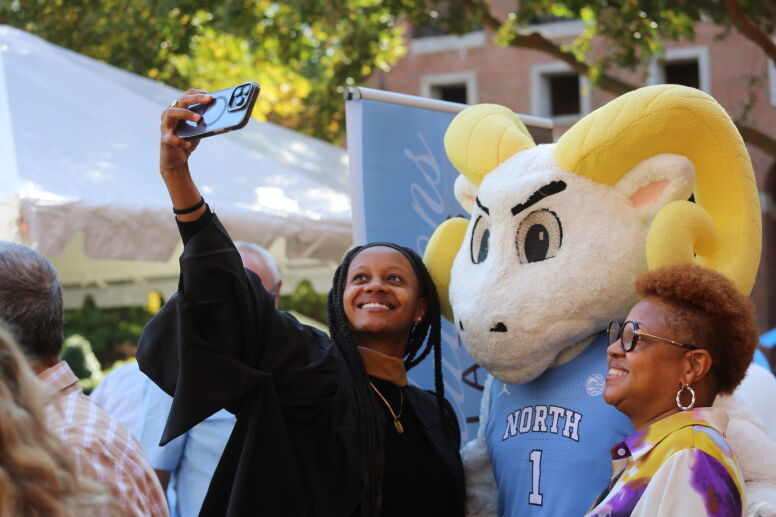
Since 1985, UNC Kenan-Flagler Business School’s Master of Accounting (MAC) Program has evolved alongside the accounting profession, preparing generations of students to navigate an ever-changing financial landscape. Change remains a constant 40 years later, and so does the program’s dedication to preparing students to lead the accounting field.
The program was approved in 1984, following years of discussion about how accounting education needed to adapt to industry changes. The inaugural class of eight students entered in fall 1985, adding a new chapter to UNC Kenan-Flagler’s long history of preparing students to lead and succeed across industries.
That willingness to evolve became a defining characteristic of the program. By 1988, it had expanded to include students from a wide range of academic backgrounds, including those without undergraduate business degrees. Enrollment climbed to nearly 100 students that fall.

Today, students with unique backgrounds remain key to the MAC experience. From the beginning, MAC’s approach was distinctive because it was built to welcome students who had not already studied accounting.
“From its very early days, our MAC program was designed for non-accounting majors and non-business majors to succeed,” says Professor Courtney Knoll (PhD ’05), associate dean of the MAC Program. “For many of our students, the MAC Program is a turning point that opens the door to careers they might not have considered before and set the trajectory for where they go next.”
Expanding access through innovation
Thirty years after the program’s founding, UNC Kenan-Flagler again looked for a new way to reach students. In 2015, it launched MAC online, making the program accessible to working professionals and students who could not relocate to Chapel Hill.
Expanding access was central to the decision, says Professor Jana Raedy, who served as the program’s associate dean from 2011 to 2021 and now is senior associate dean of business and operations for the Business School.
“There were so many potential students who simply couldn’t come back to campus,” Raedy said. “They had jobs, families and other commitments. The online format gives them another way to earn the same degree.”
For Brad Bertinot (MBA ’14, MAC ’16), a graduate of the inaugural online class of 12 students, the experience created lasting connections that continue to shape his professional journey.
“In addition to preparing me to sit for and pass the CPA exam, the program provided me with the opportunity to build strong, lasting relationships with faculty and staff,” Bertinot says. “Those relationships have continued to serve as a valuable resource throughout my professional journey, helping me navigate challenges and identify opportunities for continued growth.”
Program leaders continued to adapt as they learned what working professionals needed, introducing greater flexibility while maintaining the program’s academic rigor. In 2023 the program received STEM designation and in 2025, the School introduced the advanced standing track, offering a streamlined pathway for students who already have an undergraduate background in accounting.
Now students can choose the pathway that best fits their academic and professional goals. Online students can complete the degree at their own pace or expedite their path to graduation through advanced standing. On-campus students complete the program through a structured 12-month academic calendar. Each pathway offers the same commitment to academic excellence while meeting the diverse needs of students.

Innovation also happens inside the classroom. UNC Kenan-Flagler’s exceptional accounting faculty have long been a strength of the program, helping shape generations of accounting professionals. Faculty remain closely connected to alumni, recruiters and professional organizations to understand how the profession is changing and translate those changes into the student experience.
That matters as technology and AI reshape accounting. Technical knowledge remains essential, but program leaders see judgment, critical thinking and communication as increasingly important.
“There will always be a need for human judgment,” Knoll says. “Something we always do better than AI is being human.”
It is an idea deeply rooted in the program’s mission: preparing students for successful careers and, ultimately, leadership in the accounting profession. That commitment is reflected in student outcomes: In 2025, 99% of MAC students who participated in the structured recruiting process accepted a full-time employment offer.
The program has grown into a community of more than 5,000 alumni with more than 300 students joining the program each year. Its alumni include leaders shaping business and the accounting profession, including Mary Margaret Frank (BSBA ’92, MAC ’92, PhD ’99), dean of UNC Kenan-Flagler, and Hillary Salo (BSBA ’02, MAC ’03), vice chair of the Financial Accounting Standards Board.
Its reach has expanded, its formats have evolved and its curriculum has adapted to meet the changing needs of the profession, but its purpose remains consistent: creating pathways into accounting and preparing graduates to lead.