Skip to content Skip to Programs Navigation

Research

Real Effects of External Innovation: Evidence from the Tax Cuts and Jobs Act Graph

Real Effects of External Innovation: Evidence from the Tax Cuts and Jobs Act

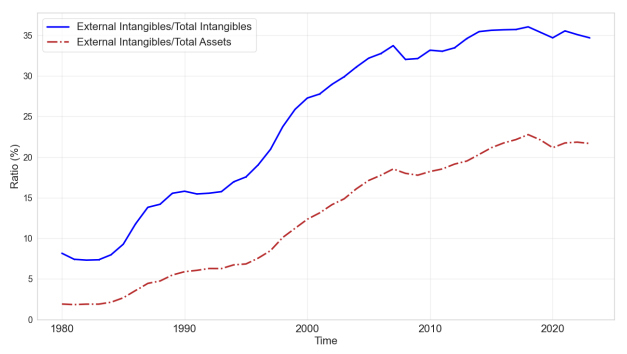
Firms increasingly rely on external sources of innovation -- such as technology licensing, purchases of intangible assets, and business acquisitions -- to augment their internal R&D. We study whether external innovation complements or substitutes internal R&D using the 2022 enforcement of Section 174 of the Tax Cuts and Jobs Act as an exogenous shock that raised the after-tax cost of internal R&D. Using a difference-in-differences design, we show that more R&D-intensive firms significantly increased externally sourced innovation -- measured comprehensively using acquired intangible assets -- without reducing internal R&D. These firms subsequently achieved higher innovative efficiency and originality, explored new technological domains, were more likely to generate breakthrough patents, and became more profitable. The effects are significantly weaker among financially constrained firms and those in highly competitive industries, consistent with limited ability to reallocate resources toward external innovation. Analysis of inventor- and patent-level data supports a synergy channel, whereby collaborations between newly hired and incumbent inventors and greater technological proximity between external and internal innovations enhance innovation productivity. Overall, our findings provide causal evidence that external innovation complements, rather than crowds out, internal R&D, and that fiscal shocks to R&D incentives can reallocate capital and talent toward more productive innovation activities.