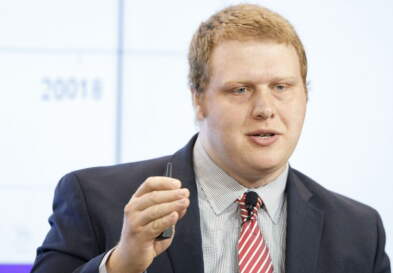
Bloomberg Tax highlights key takeaways from the Inflation Reduction Act Tax Incentives Panel Discussion that occurred at the 2023 UNC Tax Summit.
Jeff Hoopes has received the 2023 Bullard Faculty Research Impact Award which recognizes a professor whose research has had a significant impact on the practice of business.
UNC Tax Center Research Director was quoted in a USA Today fact check article on Donald Trump's presidential salary donations.
Jeff Hoopes, UNC Tax Center research director, was quoted in a Politico article and a letter from the U.S. Chamber of Commerce to the Chair of the Financial Accounting Standards Board supporting more overseas tax disclosure for global businesses.
Ed Maydew presented his working research paper at the 2022 Journal of Accounting and Economics conference held at UNC on October 13-15, 2022.
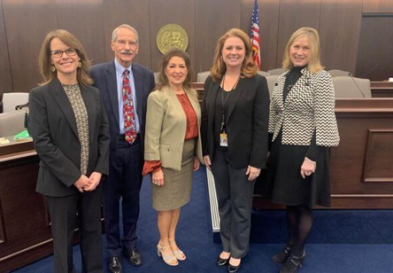
Courtney Knoll, Ph.D., CPA, Executive Director, UNC Tax Center and Associate Dean of the UNC Master of Accounting Program; Kelli Knoble, CPA, UNC Tax Center Leadership Council member; and Scott Showalter, CPA spoke at a meeting of the House Select Committee on Advancing Women in STEM.
Research by the UNC Tax Center shows just six publicly traded U.S. companies, including Amazon and Warren Buffett’s Berkshire Hathaway Inc., would have paid half the estimated $32 billion in revenue generated by a 15% corporate minimum tax signed into law last month.
Following in the tradition of many UNC tax scholars before him including Jennifer Blouin, Michelle Hanlon, Scott Dyreng and UNC Tax Center Founder Doug Shackelford, Jeff Hoopes will visit the Oxford Centre for Business Taxation (CBT) as an academic visitor for three weeks this summer.
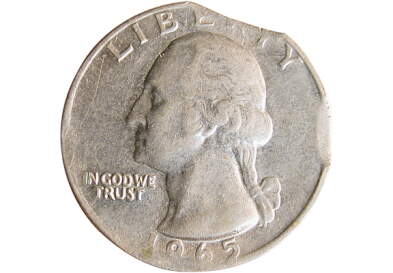
In my class, the very first tax law I mention, on slide two of day one, is named “An Act for Granting to His Majesty Several Rates or Duties Upon Houses for Making Good the Deficiency of the Clipped Money”. It was passed in England in 1696. It is known as the window tax, and it was a tax based on the number of windows you had in your house. In class we focus on this window tax, and I rarely mention what the tax was to pay for, specifically, “making good the deficiency of the clipped money”. What is that?
The destination based cash flow tax, or, as it was loving referred to among the large circle of economists who loved it, the DBCFT, was, at least in the minds of it supporters, an amazing tax. But, we don’t have one. One reason, I have heard talked about among tax people, is simply because the marketing of the tax was bad—starting with the name. DBCFT does not roll off the tongue. It does not conjure up favorable images of who will pay, or not pay, the tax. It’s too technical—not named so the every-person can understand it. What we name taxes matters. I call this phenomena optical taxation, where we pick names for taxes that conjure up images that make the tax appealing (if we want to pass it), or, make it look bad (if we want to get rid of it). Why, why the discussion around tax names?
President Biden released a budget on Monday that called for such things as increasing the corporate tax rate and taxing the accruals on capital gains of folks with more than $100 million in assets (the taxiverse has yet to converge on a catchy name for this tax). I am seeing many academic tax folks of all stripes, economists, lawyers, etc., weighing in, expressing their love, or hate, of these plans. At this point, mostly love. This is all well and good—in my view, society is better off if people who have very informed opinions weigh in with their opinion (as opposed to uninformed people weighing in, which also frequently happens).
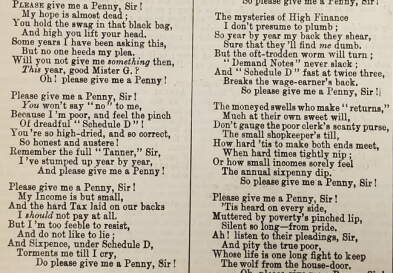
At the beginning of the pandemic, we thought state finances would be crushed. Then, as time progressed and we understood what the pandemic would do for sales taxes, that the federal government would be shoveling money to the states, etc., it became clear that many states would not struggle financially. And, indeed, some are mulling the possibility of cutting taxes to give back the extra money they have (and the problem that some federal aid seemed to preclude cutting taxes). I was reminded of this age old problem with what to do with government surpluses recently as I was reading the April 25, 1891 edition of Punch magazine, as one does, and saw this amazing poem, and, accompanying graphic.
UNC Tax Center Senior Executive Director Ed Maydew recently spoke on tax fundamentals as part of the UNC Entrepreneurship Center's Black Technology Ecosystems Investors Certificate Program.
This website uses cookies and similar technologies to understand visitor experiences. By using this website, you consent to UNC-Chapel Hill's cookie usage in accordance with their Privacy Notice.