Tucker Bartlett
Executive Vice President, Self-Help Ventures Fund
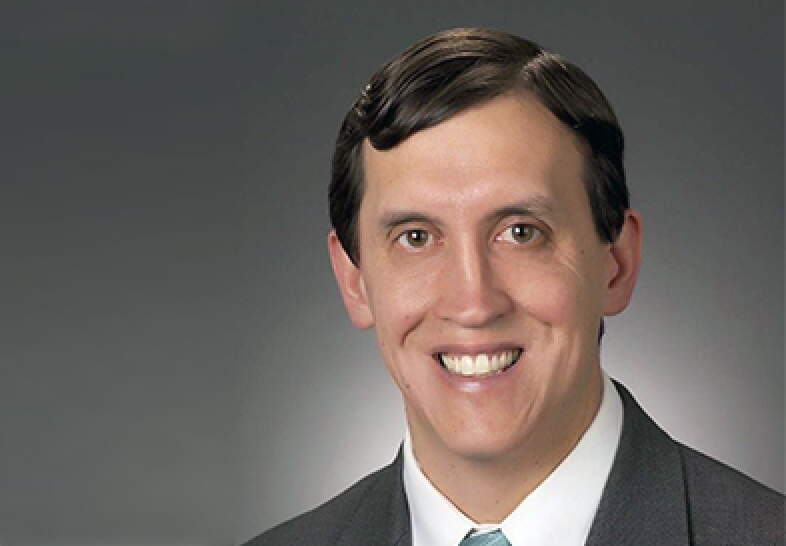
Executive Vice President, Self-Help Ventures Fund
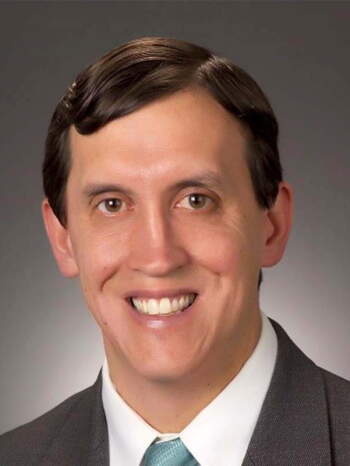
Serving as a leading voice in economic and community development, Kenan-Flagler Alumnus (MBA/MRP ‘03) Tucker Bartlett continues to give back to the community through his role of Executive Vice President at Self-Help Ventures Fund.
Prior to becoming Executive Vice President in 2010, Bartlett worked at Self-Help – a non-profit organization that promotes economic opportunity for everyone – as the Director of Commercial Real Estate Development and Lending from 2003 to 2006, where he coordinated the development and asset management of commercial real estate portfolios.
Amidst the recession, Bartlett left Self-Help to join Scientific Properties in 2006, a small up-and-coming commercial real estate firm based in Durham, NC. Serving as the Development Manager from 2006 to 2008, Bartlett soon got promoted as the Chief Operating Officer where he oversaw major development projects and grew company revenue from $1 million in 2007 to nearly $4 million in 2010.
With his position at Scientific Properties, Bartlett had the opportunity to work in his hometown. However, he soon chose to leave and return to Self-Help in 2010 to continue to mold the organization.
“I always thought I’d come back to Self-Help eventually,” Bartlett said. “Working at the business level I think … helped me relate to the small businesses during the recession.”
Bartlett credited his success within both companies to the risks he took as a graduate student when he chose to pursue work in small organizations as opposed to playing it safe in larger companies.
“What’s better about the small companies is the amount of things you’ll get exposed to. When I came out of grad school to work at Self-Help, I was doing types of [things] that my peers probably didn’t get for 10 years,” Bartlett said. “I might have had less support instead of some who went to a big company, but I got a lot more opportunity.”
Through his experiences, Bartlett developed intangible skills, learning to speak and “move between different types of people,” soon becoming what he identifies as a “bridge builder.”
“Someone who can relate to lower income people; rural and urban areas; red and blue states; speak multiple languages, not foreign, but the language of business and policy,” Bartlett said. “Basic skills are always important, but I think bridge builders [is] really what I hope to have been and what we still need in the future.”

Chairman & CEO, IotaComm, Inc.
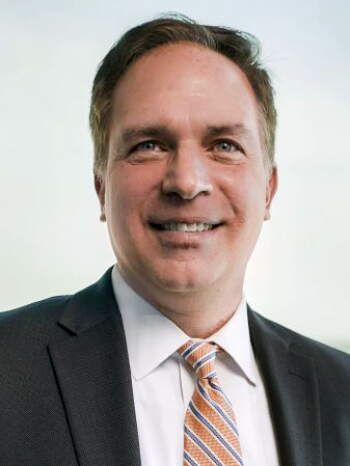
A double Tar Heel, Terrence DeFranco worked thirteen years on Wall Street before deciding to pivot into the world of entrepreneurship. The September 11th attack on the World Trade Center – where DeFranco had an office – sparked a sense of purpose within the budding business leader. DeFranco started Edentify, a data analytics solution provider focused on helping financial institutions combat fraud. He now leads IotaComm and uses his platform to make a positive impact on his home community in Lehigh Valley, Pennsylvania, and beyond.
IotaComm delivers innovative solutions that empower organizations to collect, analyze, and act on data from connected devices, driving smarter, more sustainable outcomes in the Internet of Things (IoT) ecosystem. Sustainability is a core value at IotaComm, reflected in its commitment to environmental, social, and economic impact through the Triple Bottom Line, “People, Planet, and Profit.” One initiative that exemplifies this commitment is the IotaCommUnity program and the Center for Sustainable Innovation (CSI). Among CSI’s initiatives are opportunities for paid summer internships for underserved high school students (grades 10–12), equipping them with transferable skills in artificial intelligence and technology through partnerships with local colleges and/or universities. In its inaugural year, students worked on analyzing air quality data from nearby buildings including those from the Allentown School District. DeFranco fondly recalled a conversation with a young student with asthma, who shared how the program deepened her understanding of environmental issues and empowered her to advocate for peers facing similar challenges.
After the pandemic, DeFranco enrolled in Kenan-Flagler’s MBA program. He admits he originally pursued the degree as a “bucket list item,” but quickly credited what he learned for keeping IotaComm in business as he simultaneously pursued the roles of student and CEO. Now, with a daughter about to graduate from Carolina in May, DeFranco remains involved as a guest lecturer and student mentor.
When offering advice to students aspiring to follow a similar career path, DeFranco emphasizes the importance of recognizing the vastness and complexity of the world beyond early perceptions. “The world is a lot bigger than you think it is growing up,” he reflects, urging students to approach every situation with humility. Acknowledging that his own journey from investment banker to tech CEO was not a straight line, DeFranco encourages students to embrace diverse opportunities and focus on building transferable skills, particularly “the ability to sell ideas and intangibles,” which he considers critical for long-term success.
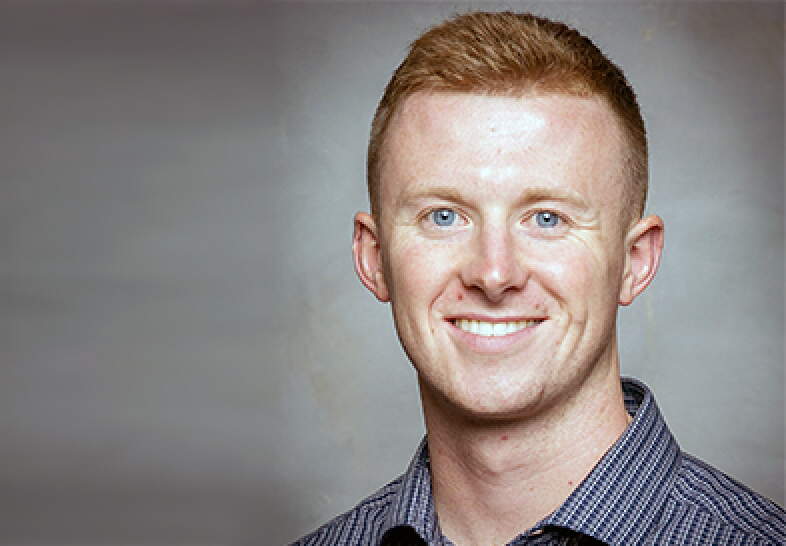
Financial Management Program, General Electric
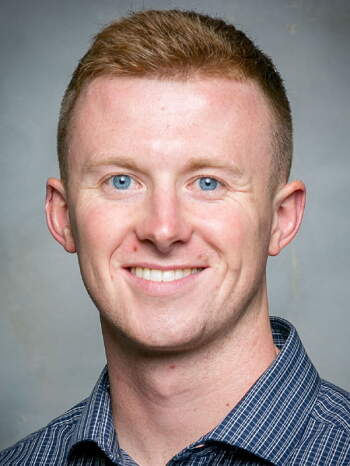
Charlie Egan remembers his undergraduate career at Kenan-Flagler quite fondly. “The structure of the program sets you up for wanting more and doing better for yourself” , he says. The small classroom sizes, group projects, and hands-on learning exposes students to how the real world functions. Working with students who have varying backgrounds, functional expertise, and interest in industries, he learned how to be flexible and apply those collaborative skills on a global scale. Additionally, being a top business program, the caliber of students within the program is exceptionally high. Charlie remembers being in awe of many of his classmates, their accomplishments, and their pursuits. Surrounded by such creative problem-solvers, students are motivated to think critically and examine business issues from a variety of perspectives.
Another aspect of the business program that Charlie appreciated was the network of alumni available to students. He found his junior year internship through an older student who had shared the opportunity with him. As a result of the positive feedback he received regarding the position, he applied to the General Electric (GE) finance internship through Careerolina which resulted in an interview and ultimately an offer for a summer internship.
After graduation, Charlie returned to GE on the full-time two year finance rotational program. When asked about what his favorite aspect of his current job was, Charlie replied “providing a service that brings electricity access to those that don’t have it” . Knowing that his company has a mission-driven purpose makes him feel good about the work he does. Over 1.2 billion people don’t have access to electricity in the world and GE is working to resolve that.
Currently, the company helps to provide 1/3 of the world’s electricity and is looking to expand the number of people it’s reaching. Connecting impoverished areas with electricity improves the standard of living and opens economic opportunities for the individuals in those areas.
Charlie also stresses the benefits of doing a rotational program with a company. His program has a total of 50 members who partake in numerous activities, and classes, and as a result have established both great working relationships and friendships.
With his program ending soon, Charlie faces a new challenge. What to do next? “Early on in your career when you’re inexperienced, people will reach out to you and want to advise you. As you progress further, the burden of what to do falls on your shoulders” . As his next step, Charlie is considering other functional areas within GE such as consulting or opportunities external to the company. He is also considering an MBA. Charlie views career progression in one of two ways – “In the beginning of your career, you can either go straight for what you’re really interested in or take traditional roles to build up your skills and experience and then apply it to what you’re really interested in”. Charlie has chosen the latter. Ultimately, however, he hopes to pivot into the sustainability space. For now, he is working on improving his business acumen and strengthening his foundation of business principles. He is optimistic that this path will bring him closer to those opportunities he wants in the renewable energy sector.
“Have patience in your career. You don’t need to be working in your dream job by year two. Understand that you will be working for many years and that you create your own timeline.”
”Never underestimate the power of networking and relationships. The connections you make in school and in your career will stay with you and open doors to opportunities when you least expect it.”

Operations Process Engineer, Dandelion Energy
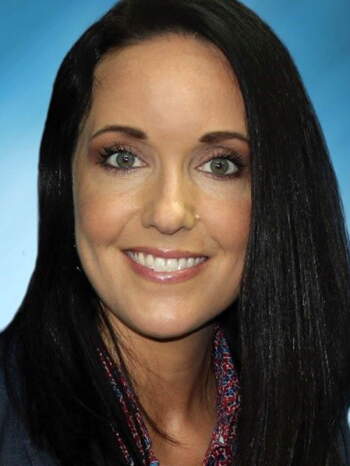
Not too long ago, Ashley Gremel was in your shoes. With graduation looming ahead, she felt the pressure kicking in to secure a job. A majority of her friends had already undergone the recruiting process and accepted full-time offers. Ashley’s hunt, on the other hand, was still very much at the beginning. However, she wasn’t worried. She approached this pursuit with the same resilience and passion that she employs in other aspects of her life.
Prior to her recruiting, Ashley laid out a set of guiding principles to abide by and recommends that current students do the same. The first was that she was unwilling to compromise her ideology or desire to work in the sustainability field. The second was that she knew she wanted to relocate to a bigger city. These two principles allowed her to narrow her search to the San Francisco Bay. Ashley states “once you’ve settled on an industry or field, that industry will greatly influence the geographical areas you can work”. The San Francisco Bay area had the “big city” factor she was looking for and the job opportunities in the renewable energy sector she wanted.
Despite some initial dead ends, she continued searching. In addition to utilizing “Handshake”, or as it was known during her tenure at Carolina, “Careerolina”, Ashley recounts how she personally reached out to solar companies, emailed dozens of HR representatives, and conducted countless phone calls with companies in the area. Additionally, she took advantage of the extensive alumni network that Kenan-Flagler has to offer and that is how she found her first job post-graduation. She began working at Sungevity, a solar company that was co-founded by a UNC alum. “Don’t be afraid to take the non-traditional path”, she tells students. Although at times, that path may seem tougher and more time-intensive, ultimately it is very fulfilling. Her top takeaway from the recruiting process was “be comfortable with the ambiguity of not knowing where you’ll be after graduation, stick to your ideology and things will work out”.
Ashley first began her career path in solar, working with homeowners and trying to understand what motivates individuals to take that first step in converting their homes into a more sustainable space. She had expected to be making top-heavy decisions, working on business strategy, and presenting slide decks to executives. However, she soon realized that a ‘first job’ will not have those responsibilities. Starting off in an entry-level position, Ashley’s job required lots of ground level project management, customer phone calls, and constant collaboration with installers. After a couple of years at Sungevity, she broadened her interest and entered the geothermal space, taking a big risk and moving to New York where she has been for the past four months.
“If you have an idea of what you want to do, spend a lot of effort and time working towards it. Do not be afraid to jump in at the bottom and work your way up. It’s better to get started than to be on the outside wanting in.”
“Be open to new opportunities. I was approached about a new job with a startup from Google which required me to move from San Francisco to NY. Had I not been willing to take the risk, I would have missed a great opportunity.”
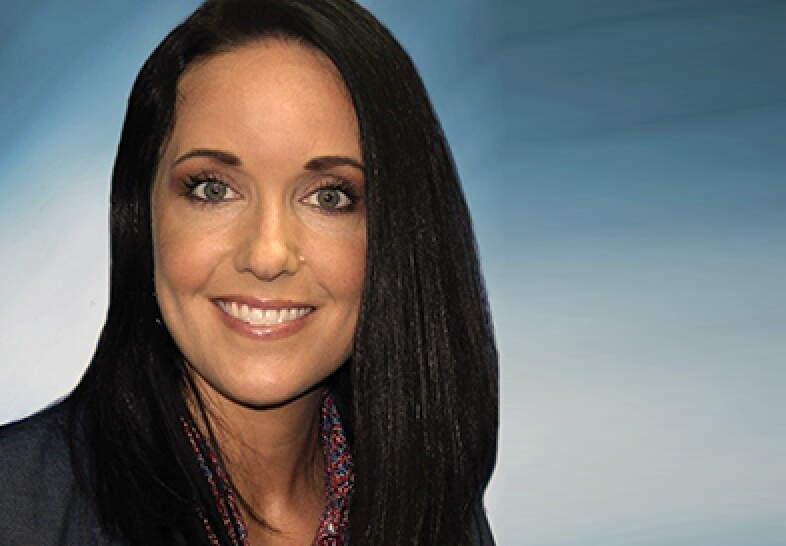
Renewable Energy Deal Origination, Wal-Mart
In 2008, a recently-graduated, single woman took a giant leap of faith when she moved to Bentonville, Arkansas. Culturally different from everything Katherine had known in her life, Bentonville was a small city nestled in a dry county of Arkansas in the heart of the Bible belt. Despite initial reservations about this new town, what drew her to Bentonville was Walmart, and the chance to help the biggest company in the world pursue its sustainability goals. She had interned with Walmart during the previous summer, kicking off their supply chain sustainability efforts with a deep dive into seven supplier industries. She analyzed the sphere of influence that each Walmart supplier had in those industries and used that influence to affect change in their own supply chain. The meaningful work drew her back to Bentonville full-time.
Thanks to Walmart, she has been able to see the world and merge her love for science and sustainability. She has had a variety of roles within the company since she first started, and as a result has never been bored. She has mapped and calculated Walmart’s internal carbon footprint, helped Walmart suppliers become more energy efficient, and now she negotiates and procures renewable energy contracts and manages a portfolio of 370 onsite solar installations.
Katherine has experienced a variety of sectors of the sustainability industry – with roles in government, nonprofit, consulting, and corporate sustainability. Each sector has an important part in building a sustainable society, and Katherine has enjoyed each sector. The corporate sector has been especially satisfying, as she has witnessed the impact of making small changes at an enormous scale.
Most of her life, Katherine has been a “workaholic”, willing to put in long hours to accomplish goals. In 2016, her world changed when she had her first child. Now she is navigating the world of a working mom, and has to work smarter and more efficiently. Her son, Cooper, is worth every minute.

Environmental Operations Executive, Bank of America
A moment of panic consumed her and Lisa felt her eyes swell up. Any minute now, the tears would come streaming down. “I can’t do this”, she said, questioning what she had gotten herself into. She wasn’t a “business” person; she loved the sciences. The study of biology was what she dedicated her entire undergrad career to. Her friend quickly alleviated her doubts when he told her that she was completely meant to be there. “Power through it. In no time at all, finance will be like second-nature to you”. She didn’t believe it at the time, but she would later learn that anything is possible if you simply put your mind to it. When she thinks of this memory, she doesn’t remember it as the time she almost came close to quitting Kenan-Flagler, instead she remembers it as the time that is a true testament to the character of Kenan-Flagler. The love and support she felt there was undeniable and helped her build the confidence she needed to succeed in her career.
Upon graduating from Kenan-Flagler, Lisa went to work at Bank of America where she has remained for the past 13 years. Although she started in the Corporate Real Estate group for BofA, she quickly transitioned into a more environmental role when her manager was pressured to start incorporating sustainability in real estate. She couldn’t believe how quickly a role dealing with environmental stewardship had fallen in her lap and it was an opportunity she could not pass up. She chaired the environmental risk and sustainability which oversaw compliance for sustainability in buildings. She instituted recycling programs, waste reduction, and greenhouse gases reduction programs.
Most notably, she is a proud of a program that was initiated in 2006 that offers a partial reimbursement to employees for their purchases of hybrid cars and has now grown to include electric cars. She was also a proponent in setting up charging locations in Bank of America parking lots to incentivize the use of new technologies as well as increase their convenience. In the past year, she has transitioned to a new role within the Bank that focuses more on environmental communications to the public. Her role aims at increasing the Bank’s visibility and involvement with external partners in the sustainability field. She has spent the past year attending seminars, speaking at conferences, and spreading the story of the Bank and its environmental performance. She is excited to see where else her sustainability journey takes her.
“When you’re applying for jobs, don’t be fixated on the title. You can contribute to sustainability efforts no matter what your job title is. Find a company that has truly integrated sustainability in their daily activities.”
“Be flexible and adaptable. Learn how to work with people of all cultures, of all educational backgrounds, and of all work styles. This will make you a very desirable candidate in the workplace.”
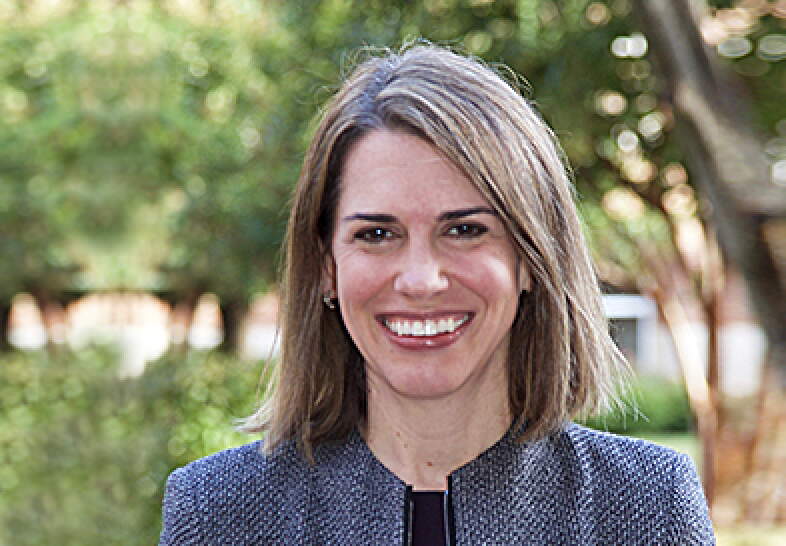
Head of Corporate Sustainability, Citi
In the early 2000s amidst 9/11 and the dot-com bubble, Valerie Smith took a huge risk when she turned down the stability of a full-time job with a big name firm in pursuit of a more purpose-driven role. The possibility of unemployment did not deter her as she knew that she would persist until she could find a job that would truly be fulfilling for her. That job would be working in sustainability.
Upon graduation from Kenan-Flagler, she worked for the Kenan Institute for 6 months as a consultant before moving to Houston, Texas for her then-boyfriend’s (now husband) job. Initially, she worked at a non-profit research institution until one day her fiancé uncovered a job posting at Citi that he shared with her. Val knew this was exactly the type of job she wanted. At this point in time, Citi was one of the few companies in the private sector focusing on sustainable growth. Val leveraged every possible connection she could think of to prepare for the interview process – reaching out to Kenan-Flagler colleagues who had gone on to do investment banking with Citi as well as professors who had done consulting for them. Her passion and desire for the role stood out and an interview and flight to New York City were offered. Now, she’s been with the company for 14 years and cannot imagine herself anywhere else.
As head of Corporate Sustainability, Valeria focuses on the company’s overarching sustainability strategy regarding environmental finance, environmental and social risk, and their operations & supply chain. She is in charge of driving certain initiatives, monitoring progress against those goals, and then communicating the goals to the greater company.
“I had decided to get an MBA because I wanted something that would be a differentiator for me among my peers in the non-profit sector. In the early 2000s, I had no idea I would go into the private sector.”
“Moving to New York City was one of the most exciting times in my life. I started working in July, got married in November, and found out I was pregnant in February!”
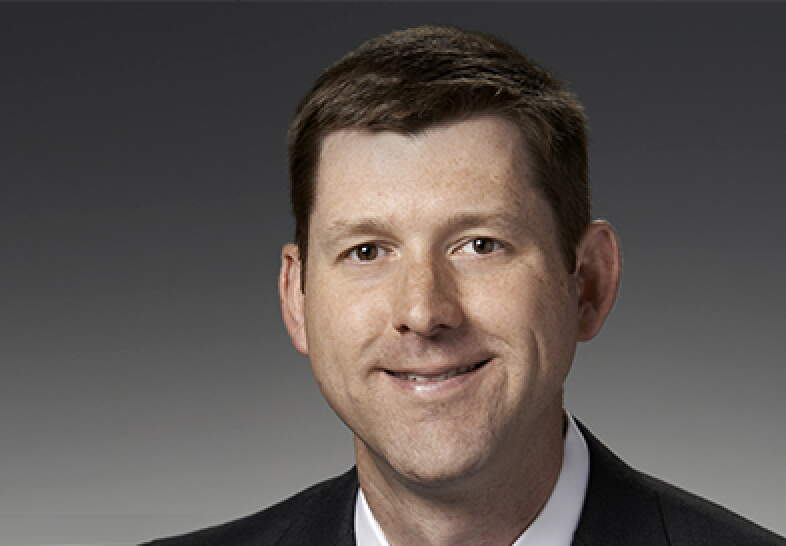
Co-Founder and Principal, Sound Grid Partners
Dan Sowder has always been driven by a calling to serve others by working towards a higher cause. As a result, serving in the Navy was an easy choice. Deciding how to serve after the Navy was a tougher challenge. Dan chose to pursue an MBA primarily to help him figure out how to implement his desire for service after the military. Assisting him with this transition were Kenan Flagler faculty and community members. Dan fondly recalls how the supportive community at Kenan-Flagler helped him discover career opportunities in the sustainable energy field that suited his skills and experiences and provided him the opportunity to make a positive impact for others.
The sustainability program at Kenan Flagler helped Dan appreciate the many opportunities to harness the power of business to drive positive change in the world. Interactions with many sustainability change agents already in business gave him an understanding the various ways to make a lasting and positive impact. Dan was intrigued by the broad range of change models, ranging from radical change to incremental change. He decided he wanted to be in the middle, working in a stable, mature company that is open to change and pays attention to environmental factors.
Dan set his sights on the energy industry as he felt he could achieve the largest impact and utilize his engineering and leadership skills developed in the Navy as a nuclear submarine officer. After first considering clean energy sectors like solar and wind manufacturers, he eventually identified electric utilities as the best opportunity to drive lasting change in the direction of a cleaner power system due to the utility’s imperative to provide safe, reliable and affordable energy that also meets people’s desire for environmental impact (echoing the triple bottom line concept of people, plant, and profit). Dan’s advice to undergraduates is this-“Big, lasting change doesn’t happen in a vacuum. It happens in a larger ecosystem and as a result, an effective change agent needs to understand how the existing system works before trying to implement change”. After business school Dan joined the electric utility Duke Energy and worked to understand the complex utility industry while driving advancements in clean energy technologies deployed on the grid.
After working with Duke Energy for several years, Dan had the opportunity to join a technology-focused start-up called 1Energy Systems that was commercializing energy storage technologies that he had piloted while at Duke Energy. While the decision to leave a stable corporate job and join a start-up company felt very risky to Dan, the ability to magnify his impact to the power system ultimately drove the tough decision to move his family from Charlotte to Seattle. “Having the personal awareness to know what drives you is a critical factor in finding the most fulfilling and impactful career direction, not only in this field but any job”. Today, Dan continues to work to in this company post-acquisition in a role where he can engage with utilities to help them embrace clean energy as an opportunity. He loves working with the folks who run the power system every day, involving them in the technology development process, and giving them tools to be change agents themselves. For him, his measurable impact comes in the form of “how many people’s hearts and minds have we won today”.
“As you enter the sustainability space and seek to change a business, try to learn as much as you can about the fundamentals of the industry and why it works the way it does today. Seek first to understand and learn, and then you become a much more powerful agent of change.”
“Every role and every company has the opportunity to become more sustainable and implement sustainable thinking. It may not be evident initially, but you can make a large impact in many companies even if your role is not labelled as a “sustainability” role.”
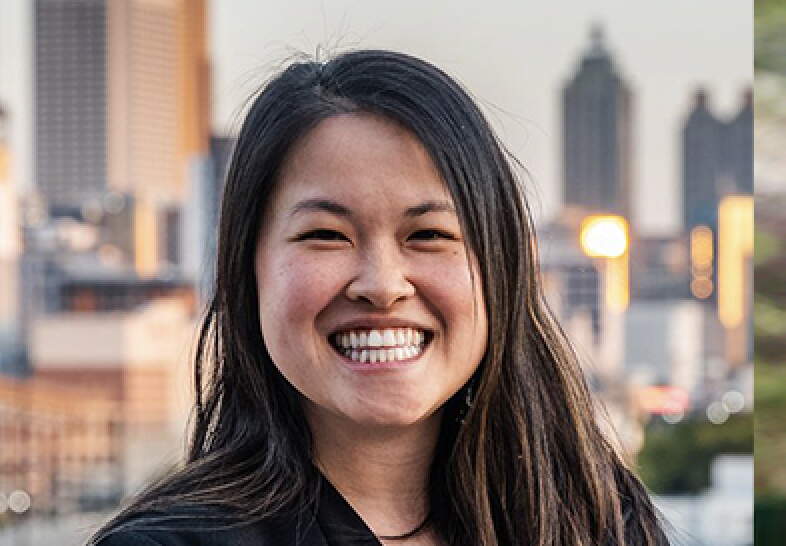
Climate and Sustainability Product Senior Manager, Boston Consulting Group
Theodora Tran’s career is a remarkable tale of vision, adaptability and purposeful growth. After earning a dual degree from UNC Kenan-Flagler Business School (MBA) and Duke University Nicholas School of Environment (Master of Environmental Management), Theo began her professional journey as a generalist consultant at ScottMadden.
While she was at ScottMadden, Theo worked closely with fellow passionate consultants to develop a framework for the company to address its own sustainability while also helping clients tackle sustainability goals. One of their standout accomplishments at ScottMadden was conducting the firm’s first materiality assessment and presenting the findings to the CEO and employees at the annual firm meeting and ultimately informing the company’s sustainability strategy. Theo also led the firm’s ESG committee, where she guided the development of the inaugural Corporate Responsibility Report, helped drive Employee Resource Groups and advised on philanthropy strategy.
Currently, Theo is a Sustainability Product Senior Manager at Boston Consulting Group (BCG), where she leverages her global perspective to address sustainability challenges across diverse industries. Her work focuses on Sustainable Operations – helping clients decarbonize their own operations and value chains by developing roadmaps to achieving net zero targets, supplier engagement strategies and reimaging product design to break the tradeoffs between customer value, cost and sustainability.
Theo’s journey offers invaluable insights for anyone navigating a career in sustainability or beyond. Her first piece of advice is to keep your long-term goals in mind without being overly fixated on securing a sustainability-specific job right away. “You can always bring a sustainability lens to any role,” she explains. “Start by building your skills, excelling in your work and earning the trust of your colleagues and leadership. Once you’ve established your reputation, you’ll be in a position to influence meaningful change.”
For early-career professionals, Theo recommends exploring conferences like GreenBiz and following job curators on LinkedIn to stay updated on opportunities. “Building a strong network and cultivating long-term relationships are essential,” she emphasizes. “Don’t approach networking with a short-term mindset. Focus on genuine connections that will support you throughout your career.”
Theo also encourages students and professionals to think broadly about sustainability. “It’s a vast field,” she notes. “You could work for a company offering sustainable products or services, even if you’re not in a dedicated sustainability role. Whether in finance, marketing or supply chain, there are countless ways to contribute to sustainable practices.”
Above all, Theo believes that preparation and persistence are key. “Luck is when preparation meets opportunity,” as the proverb says. “Set long-term goals, build the skills you need and stay proactive in seeking opportunities. The journey might not be linear, but every step you take will bring you closer to making an impact.”

Founder, Sparked Consulting
It started with coffee.
From her earliest days at UNC Kenan-Flagler Business School, Parker Wilson remembers wanting to develop a direct-to-consumer coffee roasting company. Her enthusiasm was born not of a caffeine addiction triggered by too many late nights spent studying, but rather by a thoughtful awareness of how sustainably sourced coffee could have significant social and environmental impact.
The Lexington, North Carolina native’s affinity for the social component of sustainability is encased in her very DNA. Her grandfather, an orphan who left the Junior Order Home with $5.00 in his pocket, developed into a local business leader who built a successful company that currently employs more than 150 people. Parker saw from an early age that the key to her grandfather’s success was the relationships he built with local business owners and their continued mutual commitment to helping each other grow and succeed.
The coffee company would have to wait, though. Parker graduated from Baylor University in 2006 with a bachelor’s degree in French and a fashion merchandising minor. While product development was still on her radar, she began to see the possibility of integrating her passion with an interest in socially-focused small business after she enrolled in UNC Kenan-Flagler Business School, where she earned an MBA with a focus in sustainable enterprise and marketing.
Upon graduation, Parker moved to Vancouver, British Columbia to work for lululemon athletica, serving in a variety of roles supporting operational solutions and community development, then moved to South Carolina to support buildout of the company’s presence in the Charleston area.
But the entrepreneurship pull was strong. After three years with lululemon, Parker left to launch Smockbox with two partners. The online retail company served as a marketing platform for small apparel businesses, bringing ethically made children’s clothing to busy parents’ doorsteps.
Parker’s experience with Smockbox led to what she calls “an unwavering connection to the passion of like-minded entrepreneurs.” “I saw the potential for change in the movement of small business and made it my number one goal to advance these kinds of businesses forward,” she says.
It didn’t take her long to fulfill that goal. After selling Smockbox to one of the company’s original vendors, Parker founded a boutique consultancy firm, Sparked Consulting. The firm helps socially-focused consumer packaged goods companies (CPGs) develop sales strategies and implement strong operational principles to create a foundation for sustainable growth.
Parker says she loves seeing a client go “from stuck to stoked” when they receive recognition or land a major wholesale deal. One transaction she’s especially proud of is landing a national POPSUGAR subscription box placement for one of her first clients in Wilmington, North Carolina, where she and her husband now reside.
But Parker realizes that large deals aren’t the only measure of success, and each company’s growth pattern is unique. She and the Sparked team strive to supply the right mix of strategies to ensure sustainable growth for their clients.
In spite of her success as a consultant, Parker says the pull of starting a product-focused company is still strong. She hints at the possibility of developing a second business in the near future.
Coffee, anyone?
“Find your boss, not your job. Share your career goals with your manager, and ask for opportunities. When it’s the right boss, you will experience tremendous growth – both personally and professionally.”
“Don’t wait for the good to happen. Celebrate what’s in front of you – right now.”