Perspectives
The Accidental Aquaculturist: How a Business Consultant Became a Blue Economy Pioneer
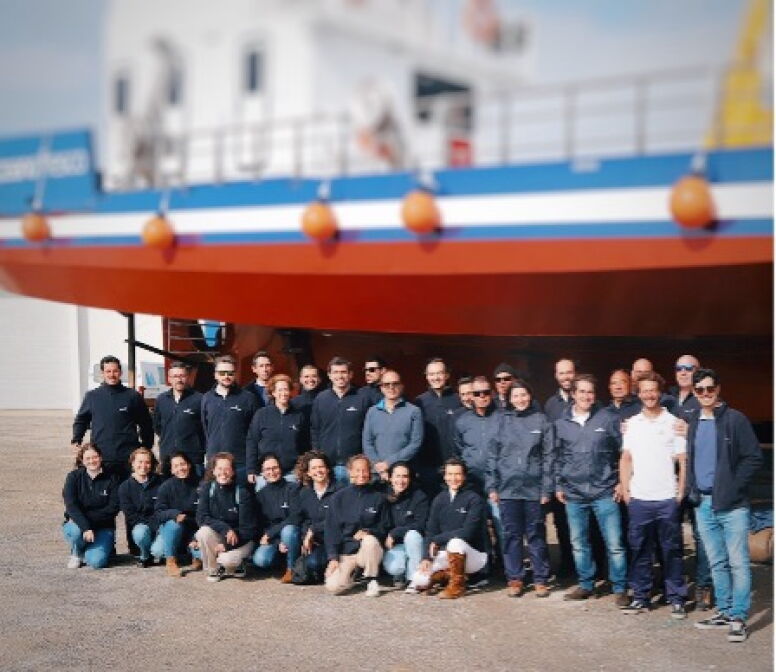
Bernardo Carvalho’s reimagined blue economy, built from the ocean up, one bivalve at a time.
When people think of regenerative food production, they often picture fields of crops and innovations in land-based agriculture. For Bernardo Carvalho, the future of sustainable food lies offshore. Rather than searching for solutions on land, he turned to the ocean where he saw an opportunity to build a food system that aligns environmental restoration with economic growth. What began as a venture to selectively improve a single clam species for aquaculture has since evolved into Oceano Fresco, a food company producing native European bivalves while advancing a vision of a blue economy built on people, planet and profit.
From Consulting Floors to Open Waters:
Bernardo Carvalho, a Portuguese native, began his career far from the sea as an agribusiness consultant in Switzerland. For fifteen years, he worked for a large firm breeding plants such as tomatoes, corn and sugar beets to enhance farmers’ productivity across various agro-climate zones.
“I have no background in aquaculture, agriculture or anything related to the primary sector,” he says. But somewhere along the way, Carvalho sensed that he wanted to do something more impactful. “I got enamored with the idea of feeding the world in a sustainable way.” And the question of how he could feed a growing planet without contributing to environmental harm became the motivation for everything that followed in his journey.
That question led him to aquaculture, and eventually to bivalves, such as oysters and clams, which are filter-feeding shellfish that naturally remove nutrients and particles from the water.
Carvalho wanted a solution that would not compromise business growth or the environment, in which all incentives were aligned to serve as an archetype for the 21st-century economy. “I wanted to create a company that would combine environmental and profit sense. Good for the environment and good as a business from the outset.” Moreover, this solution would provide new opportunities for locals, including those without higher education or specialized aquaculture skills. “We wanted to provide opportunities to people who normally don’t have a lot of career opportunities. It was like a win-win solution rather than a 19th-century approach to human management.”
For him, it was also deeply personal. “I wanted that… when I retire, I could say, okay, this was something that if I hadn’t existed, it wouldn’t have happened. I wanted to change the course, let’s say, of history.”
Why Aquaculture and Bivalves:
Carvalho didn’t see an opportunity in terrestrial agriculture. “I’m not an agronomist, I’m not a mechanical engineer,” he says, “there was no opportunity there.” But aquaculture offered something different: a chance to apply his business and entrepreneurial skills to a sector still in its infancy. “On water, we are still very much hunter-gatherers,” he explains. “We are like 10,000 years behind in water.” He saw a gap he could leapfrog into by combining lessons from terrestrial agriculture and finfish aquaculture.
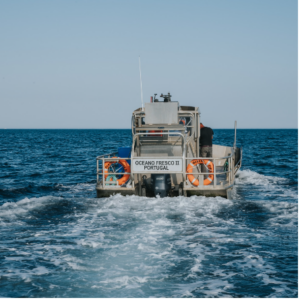
Oceano Fresco II acts as the critical logistics link, bridging the gap between offshore coastal farms and the shore to maintain efficient supply chain operations.
From here, Carvalho used his consulting skills to narrow down his search, calling the process very “abstract.” Finfish had the same issues as terrestrial agriculture and shrimp required warm waters, but Portugal is a cold-water country. That left him with bivalves, which he researched by traveling to large production countries such as China, Korea, Norway, Italy, Spain and the United States. The more they researched, the more bivalves felt right. Bivalves sequester CO2 in their shells, meaning that they trap carbon and store it in a solid state for centuries. They filter and improve water; they don’t need any artificial feed because they rely on microalgae, and they are packed with protein, low in fat, rich in iron and Omega-3s. Bivalves also have no nervous system, so they can’t feel any pain. They also fall at the bottom of the food chain, meaning their environmental footprint is one of the lowest. The biggest advantage of bivalves was that they can be farmed “without the drawbacks of terrestrial agriculture and fish farming,” making it a great solution for the environment.
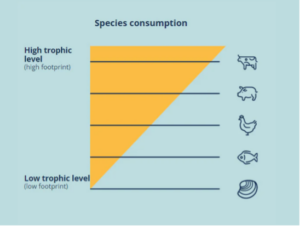
Species like oysters that are lower on the food chain require far fewer resources to produce than beef or pork, making them a good solution for sustainable yet protein- packed food.
Turning an Idea into Reality:
Choosing bivalves was just the beginning. From here, Carvalho had to turn his ambitious vision into a functioning business, which came with its own set of challenges.
Founded in 2015, OceanoFresco initially focused on selectively breeding a single native clam species for aquaculture. Over time, however, that vision expanded dramatically. The company has evolved into a vertically integrated food company that breeds, grows and sells three native European bivalve species for human consumption. “The macro vision is the same,” Carvalho explains. “How to feed the world sustainably using bivalves. But the way we do it changed completely.”
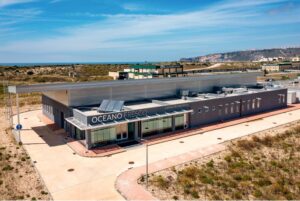
Located in Nazaré, the Biomarine Center serves as the company’s R&D hub, where the team integrates advanced biological research with shellfish farming to pioneer sustainable seafood practices.
Unlike other startups, Oceano Fresco’s initial obstacles went far beyond financials. As a biology-based business, the company’s growth depended on scientific discovery, environmental conditions and government approval at every stage. Carvalho described the process of building the company as a “400-kilometer marathon with hurdles” because of the various facets Oceano Fresco had to consider.
“We rely on public licenses to operate,” he says. “We need government permission.” Before a single shellfish could be farmed, the company had to secure funding, obtain permits for both its hatchery and offshore farms, and navigate years of biological uncertainty. “There is not 10,000 years of farming practice to rely on,” Carvalho explains. “We have to discover how to farm while already farming.” Even after securing approval, nature imposes another challenge. Bivalves require one to two years to reach maturity, so every experiment had a lengthy feedback cycle before adjustments could be made and evaluated again.
Oceano Fresco exclusively farms native European species, which once dominated European waters. Species that were commonly farmed and eaten as far back as the Roman era now account for only about 10% of European production, having largely been replaced by non-native species. Clam and oyster farming brought their own set of challenges. For clams, the grow-out phase was the most difficult due to the uncertainty of the environments in which they are grown. For oysters, the biggest challenge was how to spawn them at scale in a hatchery.
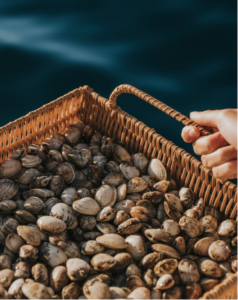
Oceano Fresco restores local biodiversity by farming native European clams, utilizing harvesting methods that work with the natural ecosystem.
“There are no proven methods,” Carvalho says. “Everywhere there are challenges.”
Yet for Carvalho, overcoming those challenges was never the end goal. They were the cost of building a company capable of proving that environmental restoration and commercial success can grow together to form the true “blue economy” he envisioned.
Building a Blue Economy:
Since the company’s founding, Carvalho’s ambition has been to prove that environmental restoration and economic growth can occur in tandem. He believes the most successful businesses of the future will be built by aligning people, planet and profit from the very beginning.
“When we harvest the potential of the ocean, the incentives of those three things should be aligned from the outset,”
Carvalho explains. Rather than extracting resources from the sea, he envisions an economy where marine ecosystems can generate food, medicine and energy while remaining healthy and productive.
That vision extends far beyond Portugal. Carvalho hopes Oceano Fresco will eventually establish farms on multiple continents, ideally close to consumer markets where seafood can be harvested fresh with minimal transportation. Expanding production would not only reduce supply chain emissions but also create skilled jobs in coastal communities while demonstrating that sustainable aquaculture can be commercially successful.
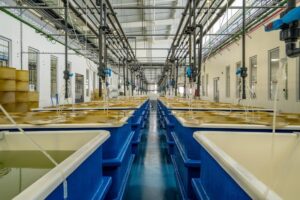
Inside the hatchery, the company applies precise scientific experimentation to large-scale bivalve breeding, overcoming the ‘biological uncertainty’ challenge in aquaculture.
As Oceano Fresco grows, Carvalho also hopes it will inspire others to invest in the blue economy. “I want to be an example,” he says, proving to entrepreneurs, policymakers and investors that businesses can generate strong financial returns while improving the environment rather than degrading it.
Although measuring environmental impact remains challenging, one achievement already stands out for Oceano Fresco. The shells of Oceano Fresco’s bivalves naturally lock away carbon for centuries, creating long-term carbon storage while producing nutritious food. “It’s not just a claim,” Carvalho says. “Probably the amount of carbon we have managed to sequester” is what he finds to be the impact he’s most proud of.
Changing the Industry from the Inside:
Building a new model of aquaculture also means changing perceptions and traditions long held within the industry. Bivalve farms naturally create sheltered habitats that function as nursery grounds for fish populations. Instead of reducing fish stocks, Carvalho believes they can actually strengthen them by providing places for younger fish to grow before moving into surrounding waters.
While older fisherman in local fishing associations believed offshore farms and aquaculture to be competition for ocean space, one conversation with a young Portuguese fisherman reinforced Carvalho’s belief. The younger fisherman saw that fish populations had increased around Oceano Fresco’s farm, so instead of avoiding that area, he began placing nets around it, making the farm a natural nursery and improving the fisherman’s catch.
For Carvalho, that interaction demonstrated how sustainable aquaculture and traditional fishing can complement one another. “You need one advocate,” he says, “then you can change others.”
That collaborative mindset extends beyond the water. Oceano Fresco employs people who work in both the fishing and aquaculture industries, from boat operators and maintenance crews to crane operators and other service contractors. Rather than replacing traditional fisheries, Carvalho sees aquaculture as an integral part of the coastal economy.
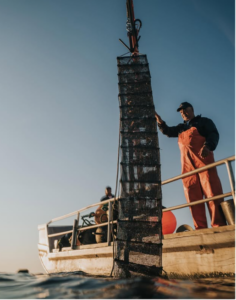
By suspending lanterns in the sea, Oceano Fresco creates protected underwater habitats that act as natural nurseries, allowing local fish populations to thrive alongside their shellfish farms.
Looking Beyond the Horizon:
Nearly a decade after founding Oceano Fresco, Carvalho believes the company’s greatest work still lies ahead. In the next five years, he hopes to prove that native European bivalves can be farmed reliably and at scale while building a recognizable brand that tells the story behind the species consumers eat.
Success, however, isn’t measured only by the number of oysters or clams sold. Carvalho wants Oceano Fresco to demonstrate that businesses built around environmental restoration can also be commercially successful. By continuing to scale production, expanding to new regions close to consumer markets and investing in science and innovation, he hopes the company will inspire investors, policymakers and entrepreneurs to view the blue economy as a solution rather than a theory.
That long-term goal shapes not only his vision for Oceano Fresco but also the way he leads. “We make many decisions that are not easily reversible,” he says. Rather than rushing to conclusions, Carvalho deliberately creates space between receiving information and making decisions. As someone who enjoys history, he often reflects on previous generations, reminding himself that today’s challenges are only one moment in a much longer story. “The world outside spins very quickly,” he says, “but inside me it spins very slowly.”
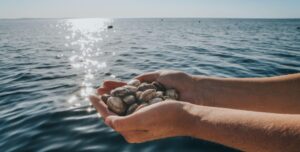
The ‘Blue Economy’ in action: Oceano Fresco aims to prove that profitable, large-scale food production can be achieved while simultaneously improving ocean health and providing stable coastal jobs.
Maintaining that perspective also means creating time away from the company. Whether bodyboarding, walking, visiting museums or attending concerts, Carvalho believes stepping back allows him to return with greater clarity. “Life is much more than just this venture,” he says, “if it doesn’t work, I can reinvent my life.”
The same philosophy extends to the people he surrounds himself with. Unlike many traditional bivalve companies, which are often family-run, Oceano Fresco hires based on merit, bringing together employees from around the world with diverse experiences and perspectives. “The difference between a very good person and an average person in a venture is huge,” Carvalho says. “It’s like special forces dropped behind enemy lines.”
When Carvalho first left consulting, he wasn’t simply looking for another business opportunity. He was searching for a way to contribute something lasting. Today, that mission remains unchanged.
“When I retire,” Carvalho says, “I wanted to say that if I hadn’t existed, it wouldn’t have happened.”
Author: Mahati Desabhatla
Photos Courtesy of Bernardo Carvalho and https://oceano-fresco.pt/en