Perspectives
Standing on the Shoulders of Giants: Turning Legacy into Leadership
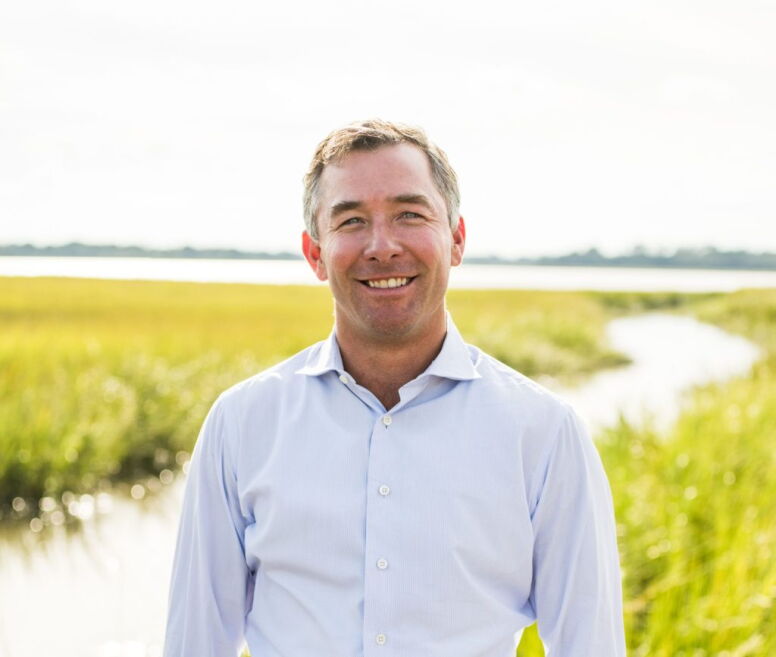
Wes Carter spent his childhood in the waters of Wrightsville Beach, surfing the breaks and fishing the marshes that felt like a second home. The countless hours in the wilderness sculpted a reverence for the outdoors that would later shape his life’s work as president of Atlantic Packaging Corporation.
Where it all began
Carter’s story is one of inherited conviction, tracing back to his grandfather, W. Horace Carter, who first founded the company, then known as Atlantic Publishing, which began as a weekly newspaper. Through a three-year editorial campaign in the Tabor City Tribune that led to the imprisonment of hundreds of KKK members, including the Grand Dragon of the Carolina’s KKK, he earned a Pulitzer Prize for Meritorious Public service in 1952. Horace Carter used his platform to combat injustices in the world.
The echo of his legacy established a strong moral compass in both his son, Rusty Carter and grandson, Wes Carter, and Atlantic Packaging Corp.
When you’re standing on the shoulders of giants, you can see further. For Carter, that clarity meant carrying out a slight modification in the company’s north star to move it toward sustainability and circularity.
In conversation, Wes Carter made it clear that his grandfather has always been a source of inspiration, and that he strives to “emulate his courage” in his own leadership.
“I fully acknowledge that I’m standing on the shoulders of giants,” he states.
The Myopic North Star
Carter’s work, like his grandfather’s, is part of a larger story. When he first joined APC in 2002, it was a thriving and growing organization with great people and a great history. Nonetheless, when he took over as President in 2016, he wanted to put his own stamp on it.
Atlantic Packaging was part of an industry that was hit in an unexpected way during the COVID-19 pandemic.
With overconsumption colliding with the rise of e-commerce shopping, packing waste piled up everywhere, including the marshes where Carter fished. As more consumers noticed the environmental degradation brought by the industry, “sustainability started to become a new doctrine for the supply chain,” and an integral part of brand identity, as he describes it.
He saw that as both a challenge and an opportunity.
“The immense packaging waste being produced and carried onto our planet is a result of industry, unintentionally in most cases, having a myopic north star and being too focused on cost and convenience, sort of at the expense of everything else.”
When you’re standing on the shoulders of giants, you can see further. For Carter, that clarity meant carrying out a slight modification in the company’s north star to move it toward sustainability and circularity.
From innovations like Cruz Foam, a sustainable Styrofoam replacement, to Fiberstrap, sustainable cable ties, Atlantic has begun reshaping what packaging can mean.
A New Earth Project
 As an avid surfer and lifelong ocean lover, Carter traveled to Indonesia, which is considered a surfing paradise. After traveling halfway across the world by flight and twelve hours by boat to reach the remote islands, he expected pristine waters.
But as he paddled out, he was met with plastic waste. He was struck by the sheer amount of plastic drifting around him.
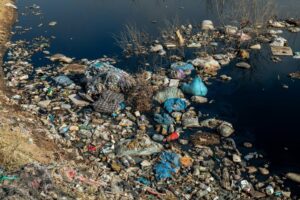 The islands he surfed were uninhabited, so the waste couldn’t have come from there. Instead, it was the byproduct of corporations, single use plastic packaging and a broken waste infrastructure.
That experience stayed with Carter and forced him to confront the hard truth: cost and convenience, while important, cannot remain the sole measure of success. To support a healthy population and a healthy planet, some level of sacrifice is inevitable.
Atlantic Packaging became the platform to prove sacrifice doesn’t have to mean loss. Instead, it can be an invitation for innovation and collaboration and a well-needed nudge to push the industry in a new direction. An industry in service to life as the emerging new north star.
That’s when A New Earth Project came to fruition, a global initiative uniting surfers, filmmakers, scientists and nonprofits under the mission of ridding the oceans, lakes and rivers of plastic pollution. With a team assembled by Carter, the movement brings together consumers, brands and packaging suppliers to pursue state-of-the-art sustainable solutions to the crisis.
Beyond the silos
“#Wedothistogether” is the tagline for A New Earth Project and a phrase that captures Wes Carter’s vision. Tackling an issue as big as the plastic pollution problem demands radical collaboration across all industry sectors. Nonprofits provide advocacy, education and grassroots support, while businesses bring scale and innovation. Artists and filmmakers translate research into compelling stories and visuals, helping the public connect with the facts and raising awareness.
There’s no room for the “us vs. them” mentality between nonprofits and for-profits, because, as Carter puts it, “the world does not work in silos.”
Building a better tomorrow
For Wes Carter, the environmental degradation he sees is a direct result of myopic industry incentives. Acknowledging that responsibility has shaped his approach at Atlantic Packaging, where he strives to turn impact into action. In carrying forward his family’s legacy, Carter reflects the same courage and commitment his grandfather showed in confronting injustice, using the platforms available to him to serve the greater good. For him, leadership is not just about business; it’s about ensuring that the work he does leaves the world healthier, cleaner and more sustainable for the generations to come. To Carter, that’s the real meaning of “legacy.”
Photos courtesy of Pexles and Atlantic Packaging. Author: Rose Kurian.