Research
Investor Perceptions of the Book Minimum Tax
Abstract
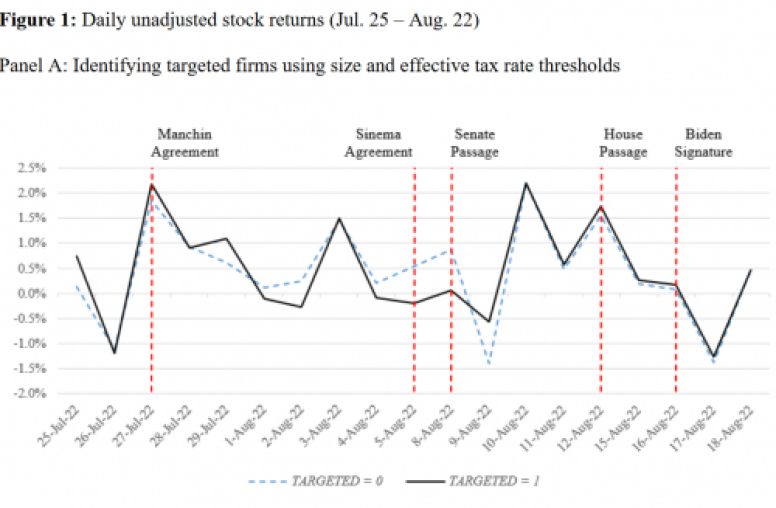
The Inflation Reduction Act establishes a new 15 percent corporate minimum tax on large U.S. corporations’ adjusted financial accounting income. While the minimum tax is estimated to raise $222 billion over 10 years, critics fear firms will manipulate their accounting earnings to reduce their tax liabilities, resulting in less revenue raised. Further, given the current political environment future legislatures could gut the tax, further eroding estimated tax revenues. Using an event study, we examine the extent to which investors believe this tax will reduce firm value. We examine stock market reactions around key legislative developments leading to the enactment of the book minimum tax. Our findings show targeted firms experience significantly lower stock returns than non-targeted firms during the enactment process (about 1.4 to 1.8 percent). In aggregate, our findings are consistent with the Joint Committee on Taxation’s revenue estimates. In cross-sectional tests, we do not observe that the firms most likely to avoid the tax via earnings management experience more positive returns, suggesting the market does not anticipate firms avoiding the tax via earnings management. Overall, our results suggest investors do not expect firms to largely avoid this tax. Instead, they expect a significant portion of the corporate minimum tax will be remitted by firms and borne by shareholders.