Perspectives
Circular Roots: Regenerating Land, Culture and Community
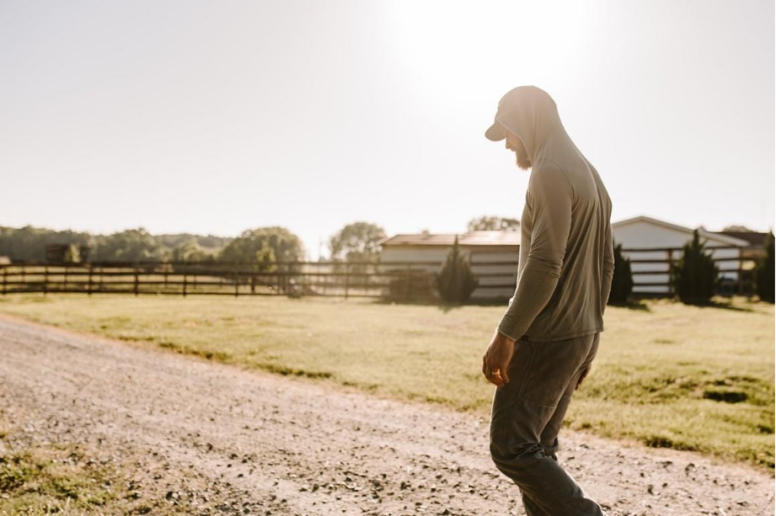
From food scraps to producing food, Kris Steele and the Crown Town Team are building a circular food economy across Charlotte. Leading the next generation of a localized food supply chain through the use of regenerative agriculture practices on local farms, composting food waste and collecting that compost to support soil health in the community. This creates a system that can sustain itself. Today, Crown Town Farm, part of a long-term initiative to build a circular economy with its sister companies Crown Town Compost and Crown Town Landscapes, is rethinking circular models in Charlotte.
Crown Town Compost: Where it all began
Crown Town Compost launched in 2014 from the ideas of Kris Steele and David Valder, who envisioned food waste not as a problem, but as an opportunity to convert it into a resource. Partnering with local households and businesses in Charlotte to collect food waste, they utilize the waste to create compost, which gets introduced back into the soil. This was just the first step on the path that led the way to Crown Town Landscapes in 2019. Nurturing the use of compost-based landscaping, they completed both household and city projects.
In 2020, the COVID-19 pandemic highlighted the vulnerability of our food systems and reinforced the need for more localized systems. This shaped Crown Town’s next step in connecting the pieces for a circular food system, Crown Town Farm.

Photo courtesy of Amelia Winchester
A Regenerative Restoration
In 2022, Crown Town bought 28 acres in Mount Pleasant, NC, located just outside of Charlotte. This wasn’t exactly prime land waiting to be planted. “It was a heavy hay field, almost as if it were concrete,” Kris stated. Essentially, the land had been abused. The big challenge was, how do you bring land like that back to life?
With guidance from consultants, one of the first steps was implementing keyline design: a method of cutting shallow channels along the land’s natural contours to allow water and air to penetrate the compacted soil. This was supplemented by early silvopasture efforts, where a few nitrogen-fixing trees and perennial plants were integrated into those lines to rebuild soil structure and fertility.
The team relies on measuring progress with real data by:
- Tracking water infiltration.
- Monitoring designated plots for biodiversity and recording the number of plant species present.
This approach blends native agricultural practices with modern ecological science, creating a sustainable path to not only increase productivity but also the health of the land itself.
A Relationship between Land and People
Crown Town isn’t just restoring nature, it’s also restoring our relationship with it. In the age before settlement, livestock roamed and grazed freely, fertilizing the grass naturally as they wandered. Today’s industrialized chain has disrupted that natural process, contributing to overgrazing and soil degradation.
Crown Town Farm is reintroducing this process in its practices by:
- Chicken Tractors: Mimic how birds behave in the wild, allowing free-ranging while still providing shelter. The chickens also eat pests like crickets and grasshoppers, reviving a symbiotic relationship in nature.
- Adaptive Multi-Paddock Grazing: A carefully planned type of rotational grazing where livestock are rotated to ensure one paddock is grazed at a time. This allows for a long rest period for the other paddocks to recover.
These methods build soil health over time by minimizing intense impact on soil over prolonged periods, mirroring how ecosystems once functioned.

Photo courtesy of Amelia Winchester
So, What’s the Use of Compost?
220 cubic yards of compost may just seem like soil, but from a microbial lens, it is a living ecosystem:
- Full of beneficial fungi such as Nematodes and Protozoa.
- These microbes are essential to unlocking nutrients in the soil and building better soil structure than store-bought compost.
Fungi play a special role too:
- Beyond visible mushrooms on the surface, underneath they form huge nervous system-like networks called mycelium.
- Mycelium acts as an ultimate nutrient exchange connector. They essentially allow plants to communicate and share resources with each other.

Photo courtesy of Amelia Winchester
Circularity in Action: An Ecosystem

The closed-loop system begins with the collection of waste from businesses and households across Charlotte. The waste is then processed into bio compost, which is rich in life, at a micro-composting site. The compost is then used to regenerate depleted soil on the farm itself. Additionally, it goes onto client’s property when providing landscaping services. The soil then supports the growth of 14+ crops. Once harvested, the food is distributed at the local level through farmers’ markets, closing the loop.
Not only does this model sustain itself, but it also promotes the local economy and educates the community about the environmental and economic impacts that are directly affecting them.
Essentially, the waste comes in, gets turned into living compost, then goes onto the fields and back into the community.
Building a Movement
“We are educating people on the fact that when you spend a dollar at a farmers market, 80% of that stays in the local community, whereas when you go to a chain grocery store, maybe 20% of that goes back to the farmer in the community.”
– Kris Steele, Co-Founder, Crown Town Farm
Farmers Market: Started in May 2025
Crown Town Farm recently started popping up at farmers markets in May 2025. By providing fresh produce to the community, they are also educating consumers on the economic benefits of a localized system.
CSA Programs: Coming Soon
They are seeking a potential CSA program where people can subscribe for a share of the harvest, providing a guaranteed income for the farm.
Agritourism: Coming Soon
Farm stays, events, workshops and educational visits let people experience the farm directly. This program will influence people’s choices, spending and maybe even inspire them to implement new practices in their own backyards.
How One Farm Sparks a Bigger Conversation
“Farming is not very profitable. It’s just a hard business to survive in—especially when you’re doing small-scale, the right way. You need capital to even try.”
– Kris Steele, Co-Founder, Crown Town Farm
Crown Town Farm isn’t just regenerating land—it’s exposing the gaps in how we reshape the current industrial model. “You need capital to even try,” Kris says, and it’s true. Despite running a model rooted in circularity, education and ecological repair, the farm still faces the uphill battle of scaling without compromising its values.
That’s where the bigger conversation begins. If we want to see resilient systems thrive, we need new financial models to match the impact being created. Models like blended finance offer a way forward: combining public, private and philanthropic capital to unlock investment in projects that serve both people and planet. Crown Town may be one small farm, but it raises big questions about what a transition to a sustainable future really takes.
To bring Crown Town Farm’s vision to life, Kris is currently working to raise $1 million in funding, aiming to transition from short-term, resource-limited fixes to long-term sustainable systems.
This serves as a reminder that creating resilient and community-focused systems—especially at a small scale requires investment, infrastructure and the trust of the community.
Want to learn more about Crown Town Farm? Visit crowntownfarm.com to explore their mission, methods and upcoming initiatives.
You can also find them in person every Saturday from 8 AM to 12 PM at the Cotswold Farmers Market (4921 Randolph Rd, Charlotte, NC) — come meet the team, shop their seasonal produce and experience Charlotte’s circular food economy in action.
Author: Cenisario Cano